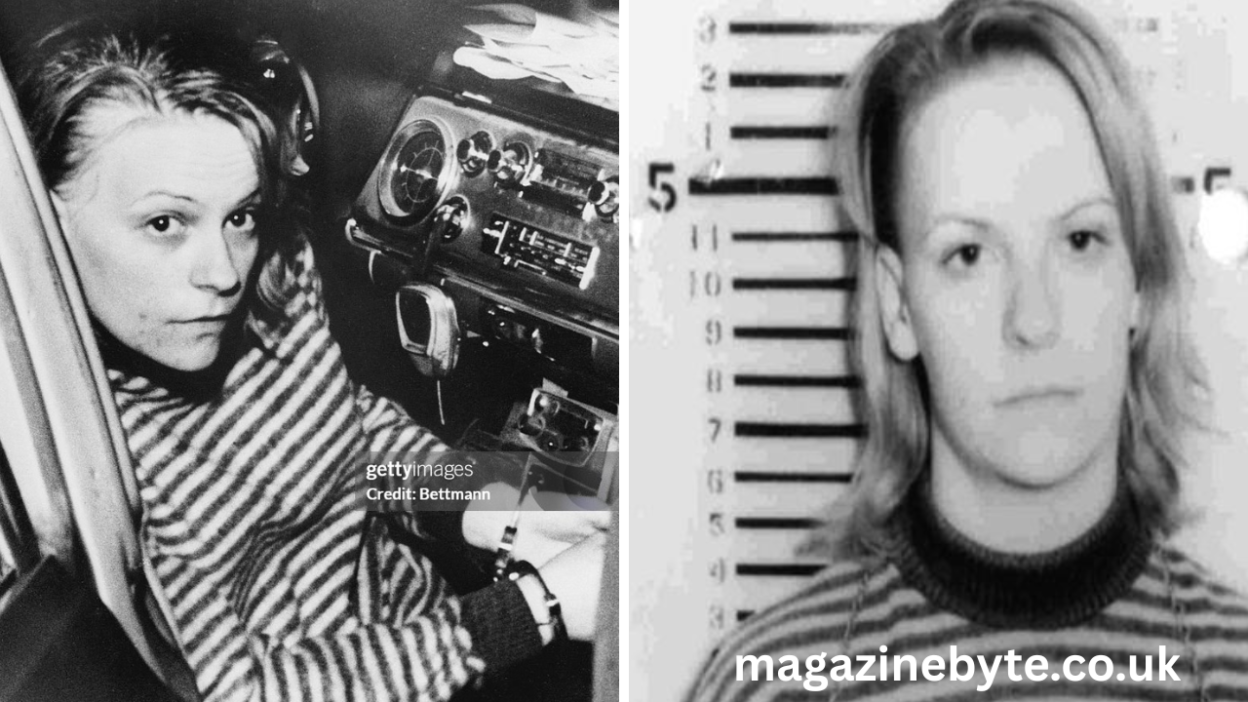
The story of Margo Freshwater is one of the most complex and emotionally layered cases in American true-crime history. It combines teenage vulnerability, violent crime allegations, a multi-state investigation, a controversial conviction, and one of the longest successful prison escapes recorded in modern U.S. history. For more than three decades, she lived under a completely different identity, building a normal family life while the past quietly followed her through records, memories, and unfinished investigations.
Table of Contents
ToggleWhat makes the case so compelling is not only the crime itself, but the contradiction at its center. Margo Freshwater is described simultaneously as a convicted murderer, a fugitive who escaped justice, a manipulated teenager, and a rehabilitated woman who lived peacefully for decades. These conflicting narratives continue to fuel debates about justice, identity, and whether a person can ever fully escape their past.
Early Life and Background of Margo Freshwater
Margo Freshwater was born in the United States in 1948 and grew up in Ohio. Very little detailed public information exists about her early childhood, but accounts of her later life suggest she came from a relatively ordinary background before becoming involved in criminal activity in her late teens.
By the mid-1960s, she was still very young, reportedly around 18 years old, when her life took a dramatic turn. This period is often described as a transitional phase in her life, where instability, emotional vulnerability, and association with older individuals began shaping her future. The keyword “Margo Freshwater early life” is often searched because people try to understand how a young woman became involved in such a serious chain of events.
Her early years are important in understanding how the legal system later interpreted her role in the crimes she was accused of. Supporters often argue that she was not a fully independent actor at the time, while prosecutors viewed her as an active participant.
Meeting Glenn Nash: The Turning Point
The most significant turning point in Margo Freshwater’s life came when she met Glenn Nash, an older man who would later become central to the criminal allegations against her. Nash was reportedly involved in legal work and had connections that initially appeared legitimate. Freshwater met him during a period when she was already facing personal challenges and instability.
Their relationship quickly evolved from professional interaction into a personal and deeply controversial partnership. According to case narratives, Nash became a dominant influence in her life, and the two developed a relationship that later became associated with criminal activity.
This connection is central to the keyword searches such as “Margo Freshwater Glenn Nash relationship” and “Margo Freshwater accomplice or victim.” Many analyses of the case focus on whether Freshwater acted under coercion or participated willingly in the events that followed.
The Crime Spree Across Multiple States
The criminal allegations connected to Margo Freshwater and Glenn Nash involve a series of violent incidents that occurred across multiple U.S. states, including Tennessee and Florida. These events reportedly took place in 1966 and involved armed robberies and the deaths of multiple individuals.
One of the most widely referenced incidents involved the killing of a liquor store clerk in Tennessee. According to case descriptions, the store was robbed, and the clerk was found restrained and shot. This incident became the primary basis for Freshwater’s later murder conviction.
Another incident occurred in Florida, where a convenience store clerk was also found dead under similar circumstances. Law enforcement agencies began to suspect that the same individuals were involved in both crimes due to similarities in method and timing.
A third case involved the death of a taxi driver, further expanding the scope of the investigation into what became a multi-state crime pattern. These events collectively shaped the prosecution’s argument that Freshwater and Nash were engaged in a coordinated criminal spree.
The keyword “Margo Freshwater crimes” often refers to this sequence of incidents, which remain central to the case narrative.
Arrest, Trial, and Controversial Conviction
Following investigations, Margo Freshwater and Glenn Nash were arrested and charged in connection with the crimes. However, the legal outcomes differed significantly for each of them.
Glenn Nash was declared mentally unfit to stand trial, which meant he did not face the same judicial process as Freshwater. This outcome became a major point of controversy in later discussions of the case.
Freshwater, on the other hand, faced trial and was ultimately convicted of first-degree murder in Tennessee. She received a 99-year prison sentence, a punishment that reflected the severity of the charges under state law.
Her defense argued that she was manipulated, threatened, and controlled by Nash, and that she was not the primary actor in the crimes. However, the prosecution maintained that she was an active participant and fully responsible under accomplice liability laws.
This stage of the case is often searched under terms like “Margo Freshwater trial details” and “why was Margo Freshwater convicted.”
Life Inside Prison and the 1970 Escape
After her conviction, Margo Freshwater was sent to the Tennessee Prison for Women. She served only a portion of her sentence before escaping in 1970, less than two years after her incarceration began.
The escape itself became one of the most defining moments in her life story. She reportedly climbed a fence and left the prison facility with another inmate. While authorities quickly recaptured her accomplice, Freshwater managed to disappear completely.
This escape marked the beginning of a 32-year period in which she successfully evaded law enforcement. The keyword “Margo Freshwater escape from prison” is widely associated with this event, as it remains one of the most remarkable fugitive cases in U.S. corrections history.
Her ability to disappear so effectively raised questions about prison security at the time, as well as the effectiveness of fugitive tracking systems in the 1970s.
Reinventing Identity: Life as Tonya Hudkins McCartor
After her escape, Margo Freshwater assumed a new identity. She became known as Tonya Hudkins McCartor, a name under which she lived for decades without detection.
Her new life was surprisingly ordinary. She worked various jobs, including positions in service industries and administrative roles. Over time, she built financial stability, formed relationships, married, and raised children. She lived in Ohio, not far from where she had originally grown up, which makes her ability to remain undiscovered even more remarkable.
She eventually became a mother of four and later a grandmother. To her family and community, she was not a fugitive but a stable, caring, and hardworking woman.
This dual existence is why searches such as “Margo Freshwater new identity” and “Tonya Hudkins McCartor real identity” remain popular. The case demonstrates how identity can be reconstructed completely, especially in pre-digital record systems.
How She Avoided Detection for Decades
One of the most fascinating aspects of the Margo Freshwater case is how she managed to avoid capture for more than 30 years. Unlike modern fugitives who face biometric databases and digital surveillance, Freshwater lived during a time when identity verification systems were fragmented.
She avoided suspicious behavior, did not commit new crimes, and maintained stable employment. She also avoided reconnecting with people from her past, which reduced the likelihood of exposure.
Ironically, her decision to live a quiet and law-abiding life after escaping prison contributed significantly to her ability to remain hidden. Most fugitives are caught due to repeated mistakes or reinvolvement in crime, but Freshwater did the opposite.
Her case is often used in criminology discussions under topics like “long-term fugitive behavior” and “identity concealment strategies.”
The Breakthrough That Led to Her Capture
The breakthrough in the case came in the early 2000s when investigators revisited old records using improved database systems. A key clue involved her use of the name “Tonya” and matching birth records.
Law enforcement officials began cross-referencing aliases with known fugitives and discovered a strong match in Ohio. Once a potential identity was identified, investigators compared photographs, personal records, and historical data.
Eventually, they confirmed that Tonya Hudkins McCartor was in fact Margo Freshwater. Surveillance confirmed her identity, and authorities arrested her in 2002.
Her arrest shocked her family, who had no idea about her past. They believed she was an ordinary woman with no criminal history.
Family Shock and Public Reaction
The revelation of her true identity caused emotional shock within her family. Her husband and children struggled to reconcile the woman they knew with the fugitive described in historical records.
Some family members defended her, describing her as loving, supportive, and non-violent. Others in the public and victims’ families saw the arrest as long-delayed justice.
This division in perception is one of the most debated aspects of the case. The keyword “Margo Freshwater family reaction” reflects the emotional complexity surrounding her arrest.
The case also attracted widespread media attention because it raised uncomfortable questions about identity: can someone truly change, and should their past define their entire life?
Legal Reversal and New Proceedings
After her return to custody, Margo Freshwater’s legal team challenged her original conviction. They argued that key evidence had not been properly disclosed during the initial trial, which may have affected the outcome.
The court later agreed that there were significant legal issues in the original proceedings, leading to the reversal of her conviction and the ordering of a new trial.
This decision did not declare her innocent but acknowledged that the original conviction was not legally sound.
She later entered a plea agreement, acknowledging responsibility under legal terms while maintaining that she did not personally commit the killings. This type of plea is often used in complex cases where defendants accept conviction without admitting factual guilt.
Release and Life After Prison
After receiving credit for time served, Margo Freshwater was released in 2011. By that time, she had already spent decades living two completely different lives—one as a fugitive and one as a grandmother and wife.
Her release marked the end of a long legal journey but not the end of public interest in her case. She returned to private life and largely avoided media attention.
Today, she remains a subject of ongoing true-crime discussion, but little verified information is available about her current life.
Why the Margo Freshwater Case Still Matters
The case of Margo Freshwater continues to attract attention because it sits at the intersection of crime, psychology, law, and identity. It raises questions about coercion, accountability, and whether justice can remain fair decades after a crime occurs.
It also highlights how dramatically a person’s life can change after a single series of events. A teenager became a fugitive. A fugitive became a mother. A mother became a convicted defendant again decades later.
The story forces society to confront uncomfortable contradictions: punishment versus rehabilitation, truth versus perception, and law versus human experience.
Conclusion: A Life Split Into Two Realities
Margo Freshwater’s life cannot be understood in simple terms. It is not just a crime story, nor just a redemption story. It is both—and more. It is a narrative of escape and survival, guilt and doubt, punishment and reinvention.
For more than 30 years, she lived as someone else entirely. Yet her past eventually returned, reshaping her identity once again. Whether viewed as a criminal, a victim, or something in between, her case remains one of the most unusual examples of long-term fugitive life in American history.
In the end, the story of Margo Freshwater is not only about what she did, but also about what identity means when time, memory, and law collide.