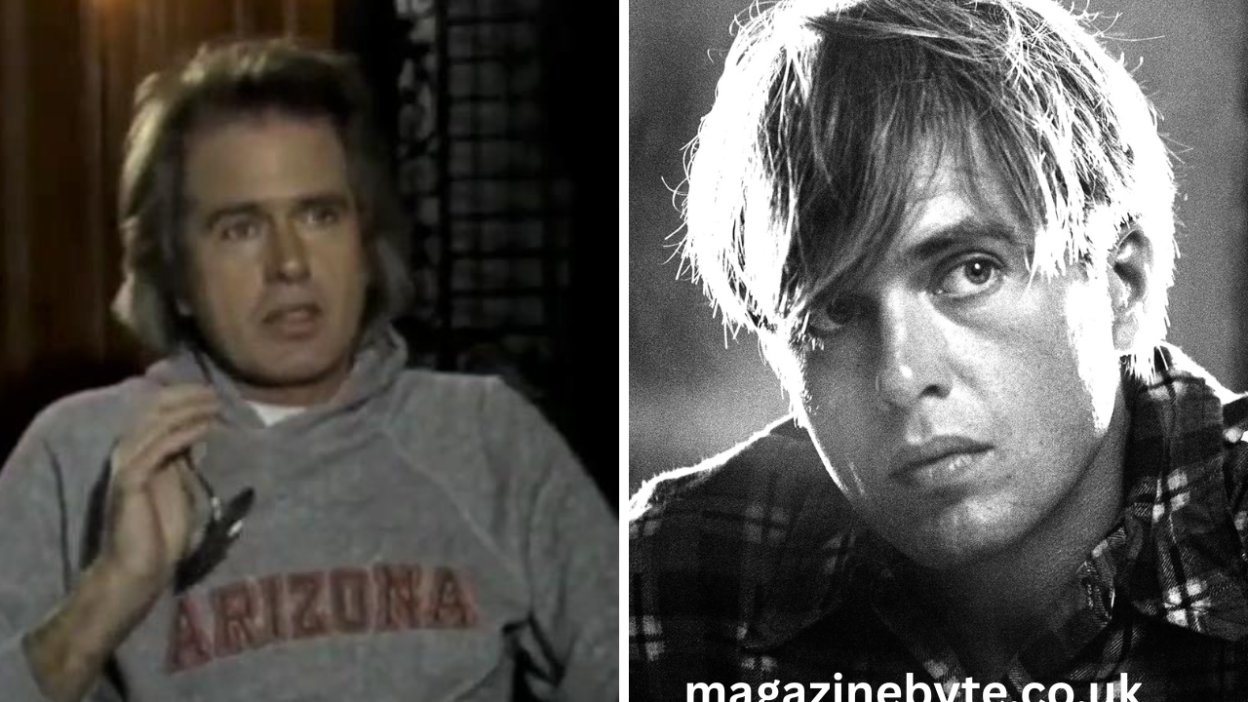
Paul Le Mat is one of those actors whose name is deeply connected with a particular era of American cinema. Best known for his unforgettable role as John Milner in George Lucas’s 1973 classic American Graffiti, Le Mat became a symbol of cool confidence, street-racing culture, and 1950s nostalgia. His performance helped turn him into one of the memorable faces of 1970s Hollywood, especially among fans of character-driven films and coming-of-age stories.
Although Paul Le Mat never became a constant tabloid celebrity, his career includes award-winning performances, respected television work, cult films, and collaborations with major filmmakers. From American Graffiti to Melvin and Howard and The Burning Bed, he built a career that balanced mainstream recognition with quieter, more serious acting roles. His story is not only about fame, but also about the changing nature of Hollywood, where one iconic role can keep an actor remembered for decades.
Early Life and Background of Paul Le Mat
Paul Le Mat was born on September 22, 1945, in Rahway, New Jersey, United States. He later became known as an American actor with a natural screen presence, often playing rugged, independent, and emotionally grounded characters. Unlike many actors who entered Hollywood through a highly publicized path, Le Mat’s rise was more closely connected to the wave of realistic, youth-centered films that shaped American cinema in the 1970s.
His background gave him the kind of authentic, understated energy that worked well on screen. He did not appear overly polished or theatrical. Instead, he often came across as believable, calm, and quietly intense. This quality became especially important in American Graffiti, where his character needed to feel like a real person from a specific time and place rather than a simple Hollywood stereotype.
Breakthrough Role in American Graffiti
Paul Le Mat’s biggest breakthrough came in 1973 when he appeared in American Graffiti, directed by George Lucas. The film became one of the most important coming-of-age movies of its time and helped launch or strengthen the careers of several actors, including Richard Dreyfuss, Ron Howard, Cindy Williams, Mackenzie Phillips, Harrison Ford, and Le Mat himself.
In the film, Le Mat played John Milner, a legendary local drag racer who drives a yellow 1932 Ford Deuce Coupe. John Milner was cool, confident, and respected, but he was also written with emotional depth. He was not just a typical street-racing character. He represented a fading era of teenage freedom, car culture, and small-town identity.
Le Mat’s performance stood out because he made John Milner feel both heroic and human. The character had charm, pride, humor, and a sense of loneliness beneath the surface. For many viewers, John Milner became one of the most memorable characters in American Graffiti. His yellow car, his controlled attitude, and his emotional scenes helped make the role iconic.
Why American Graffiti Became So Important
American Graffiti was more than just a nostalgic film about teenagers, cars, and music. It captured a turning point in American life. Set in the early 1960s, the movie looked back at a time just before major cultural changes transformed the United States. Through its characters, music, and nighttime setting, the film created a powerful emotional portrait of youth, uncertainty, and growing up.
Paul Le Mat’s John Milner played a major part in that atmosphere. He represented someone who seemed powerful in his own world but was also trapped by it. While other characters looked toward college, careers, or adult life, Milner seemed tied to the streets, cars, and reputation that had made him famous locally. This made his character both exciting and bittersweet.
The success of American Graffiti turned Le Mat into a recognized name and gave him one of the defining roles of his career. Even decades later, many film fans still immediately connect him with John Milner.
Golden Globe Recognition
Paul Le Mat’s performance in American Graffiti earned him major industry recognition. He won a Golden Globe Award for New Star of the Year – Actor in 1974. This award reflected how strongly his performance had been received and how much promise Hollywood saw in him at the time.
Later, Le Mat continued to receive attention for serious performances. He earned another Golden Globe nomination for his work in Melvin and Howard, and he won another Golden Globe for his role in the television film The Burning Bed. These honors show that his career was not based on only one famous role. He had the ability to deliver strong performances in both film and television.
Career After American Graffiti
After American Graffiti, Paul Le Mat appeared in several films that allowed him to explore different characters. One of his notable projects was Aloha, Bobby and Rose in 1975. The film featured him in a romantic drama with a road-movie feeling, again connecting him with themes of youth, escape, and emotional conflict.
In 1977, he appeared in Citizens Band, also known as Handle with Care. The film was directed by Jonathan Demme, who later became one of the most respected filmmakers in American cinema. This collaboration would become important because Le Mat later worked with Demme again in Melvin and Howard.
Le Mat also returned to the role of John Milner in More American Graffiti, the 1979 sequel to the original film. While the sequel did not achieve the same legendary status as the first movie, it gave fans another chance to see what happened to the characters after the events of the original story.
Melvin and Howard
One of Paul Le Mat’s most respected performances came in the 1980 film Melvin and Howard, directed by Jonathan Demme. In the film, Le Mat played Melvin Dummar, a real-life gas station owner who became connected to a strange story involving billionaire Howard Hughes.
The film was based on the unusual claim that Howard Hughes left part of his fortune to Dummar after Dummar supposedly helped him in the desert. Whether viewers believed the story or not, the film focused on ordinary American life, dreams, disappointment, and the blurred line between truth and myth.
Le Mat’s performance as Melvin Dummar was praised because he made the character sympathetic and believable. He did not play him as a joke or a caricature. Instead, he portrayed Melvin as hopeful, flawed, and deeply human. This role showed Le Mat’s range as an actor and proved that he could carry a film built around emotional realism rather than only style or nostalgia.
The Burning Bed and Television Success
In 1984, Paul Le Mat appeared in The Burning Bed, a powerful television film starring Farrah Fawcett. The movie told the story of Francine Hughes, a woman who suffered years of domestic abuse and eventually set fire to the bed where her abusive husband was sleeping. Le Mat played Mickey Hughes, the abusive husband.
The role was difficult and dark, but Le Mat’s performance was strong enough to earn him a Golden Globe Award. His work in The Burning Bed showed that he was willing to take on uncomfortable and serious material. The film became an important television drama and helped raise public discussion around domestic violence.
For Le Mat, the role was very different from John Milner. Instead of playing a cool, admired figure, he played a disturbing and violent character. This contrast demonstrated his acting ability and his willingness to move beyond the image that made him famous.
Cult Films and Genre Work
Paul Le Mat also became known to cult-film fans through projects such as Strange Invaders and Puppet Master. Strange Invaders, released in 1983, was a science-fiction film that connected classic alien-invasion themes with 1980s filmmaking. Le Mat played Charles Bigelow, a man drawn into a mysterious and frightening situation.
In 1989, he appeared in Puppet Master, a horror film that later became a cult favorite and launched a long-running franchise. Le Mat played Alex Whitaker, a psychic who becomes involved in a story about deadly animated puppets. While Puppet Master was very different from his earlier dramatic films, it gave him lasting visibility among horror fans.
These genre roles helped keep his career active and introduced him to new audiences. For many viewers who discovered him outside American Graffiti, his work in horror and science fiction became part of his lasting appeal.
Later Career and Television Roles
During the 1990s and 2000s, Paul Le Mat continued to appear in films and television projects. He worked in titles such as Lonesome Dove: The Series, Lonesome Dove: The Outlaw Years, American History X, Big Bad Love, The Long Shot, and Chrome Angels. These later roles were often smaller than his early breakthrough parts, but they showed his steady presence in the entertainment industry.
His appearance in American History X connected him with one of the most intense and widely discussed films of the late 1990s. Although his role was not the central focus, being part of such a serious drama added another notable title to his filmography.
Le Mat’s later work reflects the path of many talented actors who become strongly identified with one major role but continue working across different genres. He did not remain only a nostalgic figure from the 1970s. He kept appearing in dramas, western-themed television, independent films, and genre projects.
Personal Life and Public Image
Paul Le Mat has generally kept a private public image. Unlike many Hollywood personalities, he has not built his reputation around constant media attention or celebrity controversy. Much of what people know about him comes from his work rather than his personal life.
Public sources have connected him with producer and entertainment executive Suzanne de Passe. However, details about his private relationships are not as widely documented as his acting career. Because of this, it is better to discuss his personal life carefully and avoid speculation.
His quieter public presence has also helped preserve a certain mystery around him. Fans often remember him through his performances, especially as John Milner, rather than through celebrity headlines.
Acting Style and Screen Presence
Paul Le Mat’s acting style is often remembered for its natural quality. He had the ability to appear relaxed on screen while still holding attention. In American Graffiti, this worked perfectly because John Milner needed to seem like someone who did not try too hard to be cool. Le Mat gave the character confidence without making him feel artificial.
In more dramatic roles, such as Melvin and Howard, he showed emotional vulnerability. In darker projects like The Burning Bed, he showed that he could play harsh and disturbing characters convincingly. This range is one reason his career remains interesting to film historians and classic movie fans.
He was not an actor known for exaggerated performances. His strength came from realism, timing, and presence. That made him especially effective in films where character and atmosphere mattered more than spectacle.
Paul Le Mat’s Legacy
Paul Le Mat’s legacy is strongly tied to American Graffiti, but it does not end there. His career includes major awards, respected collaborations, television success, cult films, and memorable performances across several decades. John Milner remains his most famous role, but Melvin and Howard and The Burning Bed prove that he was more than one character.
His work represents a particular kind of American actor: understated, authentic, and connected to character-driven storytelling. He became famous during a period when Hollywood was changing, when directors like George Lucas and Jonathan Demme were helping reshape American cinema.
For fans of classic films, Paul Le Mat remains an important figure because he helped define the emotional tone of one of the most beloved films of the 1970s. For cult-film fans, he is also remembered through science-fiction and horror roles that found new life over time. His career may not have followed the path of a constant superstar, but it left behind performances that continue to be discussed and appreciated.
Conclusion
Paul Le Mat is best remembered as John Milner in American Graffiti, but his career contains much more than that single iconic performance. He won Golden Globe recognition, worked with respected directors, appeared in serious television dramas, and became part of cult cinema history. His roles in Melvin and Howard, The Burning Bed, Strange Invaders, and Puppet Master show the range of an actor who moved across drama, nostalgia, science fiction, horror, and television.
His story is a reminder that Hollywood fame can take many forms. Some actors remain constantly visible, while others become unforgettable through a few powerful performances. Paul Le Mat belongs to the second group. His screen presence, especially in American Graffiti, continues to keep his name alive among movie fans, proving that one well-played character can become part of cinema history forever.
you may also read :Meeting Tamaki Osaka