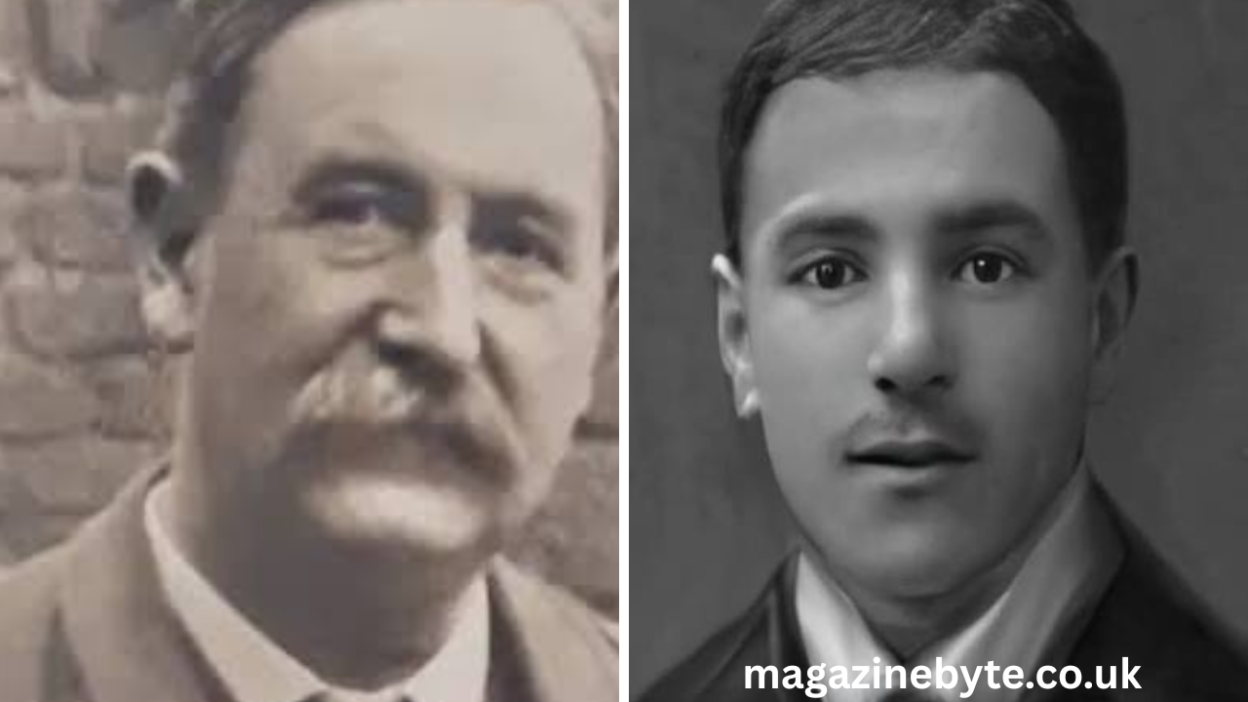
The name Aaron Kosminski has become closely linked with one of the most disturbing unsolved crime stories in British history. More than a century after the Whitechapel murders shocked Victorian London, researchers continue to debate whether this Polish-born barber could have been the killer known as Jack the Ripper.
Kosminski was not simply a modern internet suspect. Senior police officers involved in the original investigation later referred to a Polish-Jewish man named Kosminski as one of their main suspects. This historical connection gives the theory more weight than many other claims surrounding the case.
However, no court ever found Kosminski guilty. He was never charged with the murders, and no surviving physical evidence can definitely place him at any of the crime scenes. Modern DNA claims have renewed interest in his story, but those claims remain controversial.
The truth is complicated. Aaron Kosminski remains one of the strongest historical suspects, yet the evidence against him is largely circumstantial, incomplete and open to different interpretations.
Who Was Aaron Kosminski?
Aaron Kosminski was born as Aron Mordke Kozmiński in Poland in 1865. He came from a Jewish family and later moved to England during a period when many Eastern European Jews were escaping poverty, persecution and political unrest.
He is believed to have arrived in Britain during the early 1880s. Like thousands of other immigrants, he settled in the crowded East End of London, where a large Jewish community had developed.
Kosminski worked as a barber or hairdresser. His profession was ordinary and gave no obvious reason for suspicion. However, he lived in or near Whitechapel, placing him close to the neighbourhoods where the Jack the Ripper murders occurred.
Victorian Whitechapel was one of the poorest districts in London. Its narrow streets were filled with overcrowded lodging houses, workshops, markets and public houses. Unemployment, homelessness and crime were common, while the police struggled to patrol the area effectively.
Kosminski’s location later became an important part of the case against him. Researchers argued that the killer probably knew the East End well enough to move through its dark streets without attracting attention. Kosminski certainly had local knowledge, although this was also true of thousands of other residents.
The Whitechapel Murders That Terrified London
The Jack the Ripper murders took place during 1888, although the wider Whitechapel murder investigation included other killings before and after that year.
Five victims are traditionally known as the canonical five. They were Mary Ann Nichols, Annie Chapman, Elizabeth Stride, Catherine Eddowes and Mary Jane Kelly.
Mary Ann Nichols was killed on 31 August 1888. Annie Chapman was murdered on 8 September. Elizabeth Stride and Catherine Eddowes both died during the early hours of 30 September, in what became known as the “Double Event”. Mary Jane Kelly was killed on 9 November.
The murders attracted enormous press attention because of their violence. Most of the victims suffered deep throat wounds, while several bodies were badly mutilated.
The killer appeared to strike quickly and disappear before the police arrived. The crimes were committed in dark streets or private rooms in an area full of alleys and escape routes.
The name Jack the Ripper became famous after letters claiming to come from the murderer were sent to newspapers and police offices. Many historians believe most, or possibly all, of these letters were hoaxes written by journalists or members of the public.
Despite a huge police investigation, the killer was never arrested. Numerous men were questioned, followed or considered suspicious, but none was proved to be responsible.
Why Police Became Interested in Kosminski
Aaron Kosminski is an important suspect because his surname appears in the later writings of senior police officials connected with the investigation.
In 1894, Assistant Chief Constable Sir Melville Macnaghten prepared a private report now known as the Macnaghten Memorandum. In it, he discussed three men whom he considered possible Jack the Ripper suspects.
One was Montague John Druitt, a barrister and teacher who died shortly after the murders. Another was Michael Ostrog, a criminal and confidence trickster. The third was a Polish Jew named Kosminski.
Macnaghten described Kosminski as a man who lived in Whitechapel and suffered from serious mental illness. He also claimed that Kosminski had a strong hatred of women and homicidal tendencies.
However, Macnaghten did not provide detailed evidence showing that Kosminski had committed any of the murders. He did not identify a weapon, a confirmed witness or a direct link to a crime scene.
Another senior officer, Assistant Commissioner Sir Robert Anderson, later wrote that the police believed the murderer was a Polish Jew. Anderson claimed that the suspect had been identified by a witness but that the witness refused to testify.
Anderson did not name the suspect in his published account. However, Chief Inspector Donald Swanson wrote notes in the margin of his personal copy of Anderson’s book.
These handwritten comments named the suspect as Kosminski. Swanson also wrote that the man had been watched by police before being sent to a workhouse and later transferred to an asylum.
The comments became extremely important because Swanson had been closely involved in the Whitechapel investigation. His notes appeared to connect Anderson’s unnamed Polish-Jewish suspect with Kosminski.
Even so, major questions remain. No surviving official report describes the alleged identification in detail. The identity of the witness is uncertain, and historians still debate where and when the identification took place.
The Mystery of the Alleged Witness Identification
The reported witness identification is one of the most fascinating parts of the Aaron Kosminski theory.
According to Anderson, the witness recognised the suspect but refused to give evidence against him. Anderson suggested that both men were Jewish and that the witness would not testify against another Jewish person.
This explanation has been criticised. Some historians believe Anderson’s claim reflected Victorian prejudice rather than reliable information. Others argue that the witness may have been afraid, uncertain or unwilling to appear in court.
Several people have been suggested as the possible witness. One is Israel Schwartz, who reportedly saw a man attacking Elizabeth Stride shortly before her death. Another is Joseph Lawende, who saw Catherine Eddowes speaking with a man near Mitre Square before she was killed.
Neither identification has been conclusively proved. No surviving document clearly states that Schwartz, Lawende or any other witness identified Aaron Kosminski.
There is also uncertainty about where the identification may have happened. Some researchers have proposed a police station, while others have suggested a private location or a specialised identification facility.
Without a complete contemporary record, the witness story cannot be independently confirmed. It remains important but frustratingly incomplete.
Aaron Kosminski’s Mental Health
Kosminski’s later medical records show that he experienced severe and long-term mental illness.
His family first took him to the Mile End Old Town Workhouse in July 1890. He was released after only a few days into the care of his brother.
He returned to the workhouse in February 1891 and was then transferred to Colney Hatch Lunatic Asylum. In 1894, he was moved to Leavesden Asylum, where he remained for the rest of his life.
Medical records described him as suffering from delusions and auditory hallucinations. He reportedly believed that he was controlled by an outside force and claimed to hear voices.
He also refused food from other people and sometimes ate discarded food instead. His personal hygiene became extremely poor, and he showed little interest in work or ordinary daily life.
One disturbing incident involved a knife. Records stated that he had once taken up a knife and threatened his sister. This detail has frequently been used to support the argument that he could have been violent.
However, there is a major difference between threatening someone during a mental health crisis and committing a series of planned murders. His medical records do not describe him as a known killer or as a person with a clear history of repeated physical attacks.
It is also important not to treat mental illness as proof of violence. Many people with serious psychiatric conditions are not dangerous, and Kosminski’s diagnosis alone cannot establish guilt.
Did His Asylum Admission End the Murders?
Some supporters of the Kosminski theory argue that the killings stopped because he was eventually placed in an institution.
This theory has a significant timing problem. The final canonical murder, that of Mary Jane Kelly, occurred in November 1888. Kosminski was not permanently confined until 1891.
This leaves a gap of more than two years. If he was Jack the Ripper, researchers must explain why the main murder series apparently stopped long before his permanent admission.
It is possible that the killer stopped voluntarily, moved away, died, was imprisoned for another offence or changed his behaviour. Serial murder investigations do not always end because the offender is arrested or confined.
Nevertheless, Kosminski’s institutional timeline does not provide a simple explanation for the end of the murders.
The Catherine Eddowes Shawl
Modern interest in Kosminski increased after businessman and author Russell Edwards purchased a patterned cloth at auction in 2007.
The cloth was described as a shawl allegedly connected to the murder of Catherine Eddowes, who was killed in Mitre Square on 30 September 1888.
According to its reported history, a police officer named Amos Simpson took the shawl from the crime scene and gave it to his wife. The material was then said to have remained in the family for generations.
Edwards arranged for stains on the shawl to be tested. Researchers compared mitochondrial DNA found on the material with samples from living maternal relatives of Eddowes and Kosminski.
The results were presented as evidence linking both the victim and suspect to the shawl. Newspaper headlines around the world claimed that Jack the Ripper had finally been identified.
The announcement brought Aaron Kosminski back into the centre of the mystery. However, forensic experts and historians quickly questioned whether the evidence was strong enough.
Problems With the DNA Evidence
The shawl DNA claim does not provide unquestionable proof that Kosminski was Jack the Ripper.
The first problem is the history of the shawl. No reliable surviving police record confirms that it was found beside Catherine Eddowes or taken from Mitre Square.
Its connection with the murder depends largely on family tradition. Because the claimed history cannot be fully documented, it is possible that the shawl was never present at the crime scene.
The second problem is contamination. The material passed through many hands over more than a century. It was handled, stored and displayed without modern forensic controls.
DNA from investigators, family members, collectors, auction staff or members of the public could have been transferred to the cloth.
The third issue involves mitochondrial DNA. Unlike nuclear DNA, mitochondrial DNA is passed through the maternal line. People from the same maternal family may share an identical or highly similar profile.
This means that mitochondrial DNA cannot usually identify one individual with complete certainty. A match may show that a person cannot be excluded, but it does not prove that the DNA belonged only to Aaron Kosminski.
Questions were also raised about the release of the original laboratory data. Without full access to the raw information, independent scientists cannot completely repeat or verify the findings.
The DNA evidence is therefore interesting, but it has not solved the case beyond reasonable doubt.
Arguments Supporting the Kosminski Theory
Kosminski fits several important parts of the suspected killer’s profile.
He lived close to Whitechapel and would have known the local streets. He was around the right age and lived in London during the murders.
Most importantly, he was named by senior police figures who had direct knowledge of the original investigation. Few modern suspects have such a strong connection with the officers who worked on the case.
Swanson’s notes suggest that police watched Kosminski and may have believed a witness recognised him. Anderson also appeared convinced that the killer had been identified.
Kosminski’s severe mental deterioration and reported knife threat have also been used to support the theory.
The disputed shawl evidence provides an additional connection, although its reliability remains heavily questioned.
When these details are considered together, it becomes understandable why Kosminski remains one of the most discussed suspects.
Arguments Against the Kosminski Theory
The case against Kosminski also contains serious weaknesses.
No surviving evidence places him at any of the murder scenes. No weapon connected with the killings was found in his possession.
He never confessed, and no verified letter from Jack the Ripper has been linked to him.
The alleged witness identification is not supported by a complete official report. Historians do not know exactly who the witness was, what the witness saw or why no legal action followed.
Kosminski’s asylum records describe a deeply unwell and disorganised man. Some researchers question whether he would have been capable of committing several murders while repeatedly avoiding arrest.
There are also inconsistencies in police accounts. Macnaghten, Anderson and Swanson wrote about the case years after the main murders, and some of their details do not perfectly match Kosminski’s known history.
Macnaghten reportedly suggested that Kosminski had died soon after being committed, yet Aaron Kosminski lived until 1919. This raises the possibility that Macnaghten was mistaken or confused him with another man.
The shawl evidence remains uncertain because of its questionable history, possible contamination and limited DNA value.
Could Police Have Confused Him With Another Suspect?
One theory is that the police may have confused Aaron Kosminski with another Polish-Jewish suspect.
The East End contained a large immigrant population, and several men with mental health problems came to police attention.
A man known as David Cohen has sometimes been proposed as an alternative. Cohen was admitted to an asylum in 1888 and died the following year. His real identity may have been unknown, and his behaviour was reportedly violent.
Another suspect was Nathan Kaminsky, whose name sounds similar to Kosminski. Some writers have suggested that Kaminsky, Cohen and Kosminski may have become confused in later police memories.
This theory remains speculative. However, it could explain why some police descriptions do not fully match Aaron Kosminski’s documented life.
Antisemitism and the Investigation
The Kosminski theory must also be considered within the social climate of Victorian London.
After the murders, antisemitic rumours spread through the East End. Some residents blamed Jewish immigrants without evidence.
Tensions became especially serious after the murder of Annie Chapman and the discovery of writing near the site connected with Catherine Eddowes’s apron.
Police Commissioner Sir Charles Warren ordered the writing to be erased because he feared it could trigger anti-Jewish violence.
This background does not mean Kosminski was innocent. However, it shows why claims about a Polish-Jewish suspect must be examined carefully.
Victorian officials sometimes repeated stereotypes about immigrants, mental illness and Jewish communities. Modern researchers must separate genuine investigative evidence from the prejudices of the period.
Aaron Kosminski’s Final Years and Death
Kosminski spent the final decades of his life in psychiatric institutions.
After his transfer to Leavesden Asylum in 1894, his physical and mental condition continued to decline. He remained isolated and dependent on institutional care.
He became extremely underweight and suffered from poor health. He died on 24 March 1919, more than thirty years after the Whitechapel murders.
His recorded cause of death was related to complications from infection and severe physical weakness.
Kosminski died without being charged with murder and without publicly responding to the accusations later made against him.
For most of his lifetime, he was not widely known as a Jack the Ripper suspect. His name became famous only after police documents and private notes were examined by later researchers.
Other Major Jack the Ripper Suspects
Aaron Kosminski is only one of many men accused of being Jack the Ripper.
Montague John Druitt became a major suspect because Macnaghten believed he was responsible. Druitt died in the River Thames shortly after the final canonical murder.
George Chapman, whose real name was Seweryn Kłosowski, was a Polish-born barber who later murdered several women by poisoning them. He lived in Whitechapel and was suspected by Inspector Frederick Abberline.
Thomas Cutbush, Francis Tumblety, Walter Sickert and Michael Ostrog have also appeared in books and documentaries.
Some theories have accused doctors, artists, members of the royal family and political figures. Most of these claims rely on weak evidence, speculation or later invention.
Compared with many suspects, Kosminski has a stronger historical connection because senior police officers actually named him. Even so, being a serious suspect does not mean he was guilty.
Why the Jack the Ripper Case Remains Unsolved
The investigation took place before modern forensic science.
Police had no DNA testing, fingerprint databases or reliable blood analysis. Crime scenes were not protected to modern standards, and evidence was often handled by many people.
Whitechapel was densely populated, and witnesses frequently gave uncertain or conflicting descriptions. Street lighting was poor, while the killer appeared to choose times when few people were nearby.
The press also complicated the investigation. Newspapers published rumours, criticised the police and printed sensational claims.
Hundreds of letters were sent by people pretending to be the killer. Police officers had to spend valuable time examining messages that were probably false.
Important records were later lost, destroyed or scattered. As a result, researchers now work with an incomplete collection of police files, newspaper reports, medical records and personal recollections.
This lack of evidence makes it extremely difficult to prove the identity of the killer more than a century later.
Was Aaron Kosminski Really Jack the Ripper?
The honest answer is that nobody can say with certainty.
Aaron Kosminski was a real police suspect. He lived in the correct area, was named by senior officers and may have been identified by a witness.
These facts make him more credible than many suspects created by later writers.
However, there is no confirmed crime-scene evidence, reliable confession or complete witness report connecting him to the murders.
The shawl DNA theory has strengthened public interest but has not produced universally accepted proof. Its history is uncertain, and the scientific results cannot uniquely identify Kosminski as the source of the DNA.
The case remains based on possibility rather than certainty.
Conclusion
The story of Aaron Kosminski and Jack the Ripper remains one of the most fascinating mysteries in criminal history.
Kosminski was a Polish-Jewish immigrant, a Whitechapel barber and a man who suffered from severe mental illness. His name appeared in the writings of senior police officers who believed a Polish-Jewish suspect may have been the killer.
The police interest in him was genuine, but the surviving evidence is incomplete. No document proves that he murdered Mary Ann Nichols, Annie Chapman, Elizabeth Stride, Catherine Eddowes or Mary Jane Kelly.
Modern DNA claims involving Catherine Eddowes’s alleged shawl have not settled the debate. Questions about contamination, ownership and scientific reliability remain.
Aaron Kosminski may have been Jack the Ripper, but he may also have been a vulnerable man wrongly suspected because of his location, illness and background.
Until stronger and independently verified evidence emerges, Jack the Ripper’s identity must remain officially unknown. Kosminski will continue to stand among the leading suspects, but history cannot yet deliver a final guilty verdict.
You may also read : The Beginning of Her Modelling Career