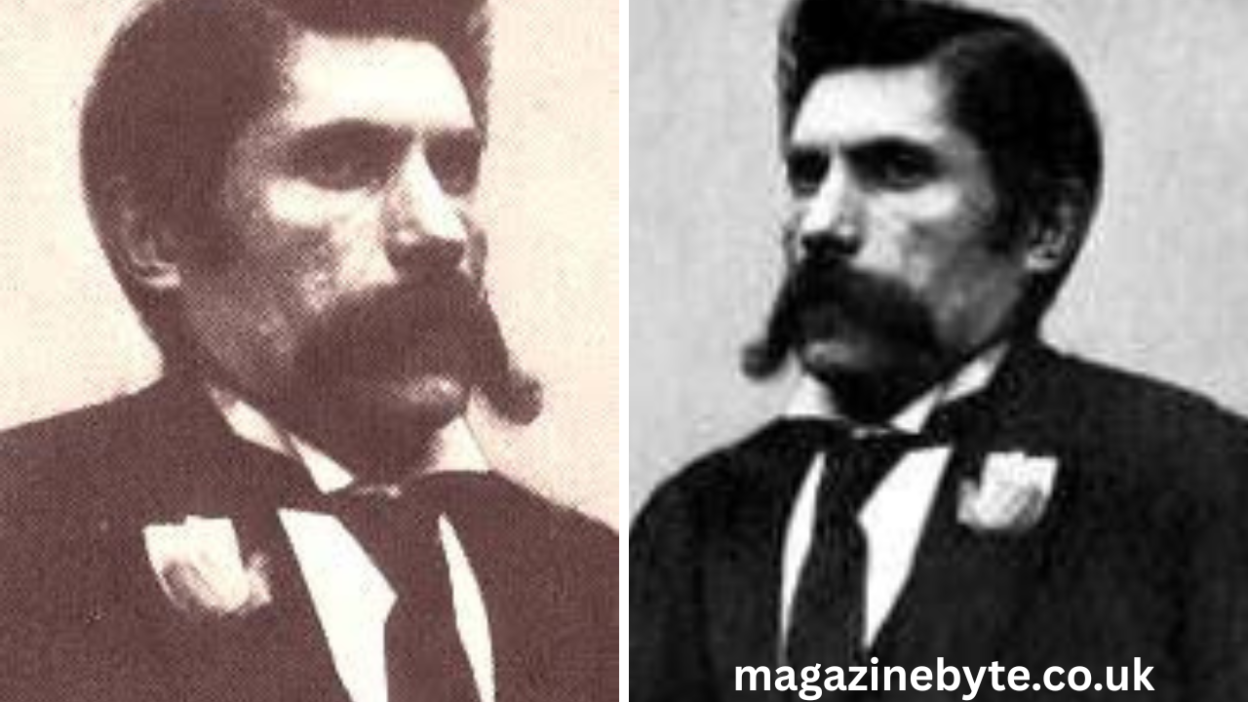
The name Aaron Kosminski has remained closely connected to the mystery of Jack the Ripper for more than a century. Jack the Ripper was the unidentified killer responsible for a series of brutal murders in London’s Whitechapel district in 1888. Although police investigated many possible suspects, no one was ever convicted, and the killer’s real identity remains unknown.
Kosminski became one of the most widely discussed suspects because senior police officials reportedly considered a Polish Jewish man living in Whitechapel to be a likely offender. Later documents appeared to identify that man as Kosminski. His mental illness, proximity to the murder locations and later admission to an asylum strengthened public interest in the theory.
However, there is no conclusive proof that Aaron Kosminski committed the Whitechapel murders. Modern DNA claims have also been strongly disputed. His story therefore sits between historical evidence, police suspicion and popular speculation.
Who Was Aaron Kosminski?
Aaron Kosminski was born as Aron Mordke Kozmiński on 11 September 1865 in Kłodawa, an area of Congress Poland that was then controlled by the Russian Empire. He came from a Jewish family and later moved to England, probably during the early 1880s.
Like many Jewish families from Eastern Europe at the time, Kosminski’s relatives may have left their homeland because of poverty, discrimination and political instability. Large numbers of Jewish immigrants settled in London’s East End, where rents were lower and established immigrant communities offered employment and social support.
After arriving in London, Kosminski lived with relatives in or near Whitechapel. He was described as a barber or hairdresser, although historical records provide limited information about his professional life. He did not become publicly famous during his lifetime. His name only became internationally recognised decades later because of his alleged connection to the Jack the Ripper investigation.
Whitechapel in the Late Nineteenth Century
To understand why Kosminski became a suspect, it is important to understand the conditions in Whitechapel during the 1880s. The district was one of the poorest and most crowded parts of Victorian London. Its narrow streets contained overcrowded houses, cheap lodging establishments, workshops, markets and public houses.
Many residents worked in unstable or poorly paid jobs. Homelessness, crime, alcohol misuse and poor sanitation were common. Women living in extreme poverty were particularly vulnerable. Some occasionally depended on sex work to pay for accommodation, food or alcohol.
The area also had a large immigrant population, including Jewish families from Eastern Europe. Social prejudice was widespread, and immigrants were sometimes unfairly blamed for crime or economic problems. This atmosphere affected the Jack the Ripper investigation, as rumours frequently focused on foreigners, Jewish residents and people considered socially different.
The Jack the Ripper Murders
Jack the Ripper is the name given to the unidentified killer associated with several murders in and around Whitechapel in 1888. The five victims most commonly connected to the killer are known as the Canonical Five.
Mary Ann Nichols was killed on 31 August 1888. Annie Chapman was murdered on 8 September. Elizabeth Stride and Catherine Eddowes were both killed during the early hours of 30 September, an event later called the “double event.” Mary Jane Kelly was murdered on 9 November 1888.
The victims suffered severe injuries, particularly to the throat and abdomen. The violence led some investigators to believe that the murderer had knowledge of anatomy, but this theory has always been debated. The crimes caused widespread fear and attracted intense attention from newspapers across Britain.
Letters claiming to come from the killer were sent to police and news organisations. One letter was signed “Jack the Ripper,” creating the name that became permanently connected to the case. However, many of the letters were probably written by journalists, members of the public or people seeking attention.
How Aaron Kosminski Became a Suspect
Aaron Kosminski was never formally charged with the murders. The case against him developed mainly from comments and private documents connected to senior police officials.
In 1894, Assistant Chief Constable Sir Melville Macnaghten prepared a confidential memorandum discussing possible Jack the Ripper suspects. He mentioned a Polish Jewish man called “Kosminski,” describing him as someone who lived in Whitechapel and later entered an asylum.
Macnaghten’s memorandum became important because it showed that Kosminski was known to senior investigators. However, the document was written several years after the murders, and some details appear inconsistent with surviving records.
Former Assistant Commissioner Sir Robert Anderson later wrote that police believed the murderer was a Polish Jewish man who had been identified by a witness. According to Anderson, the witness refused to give evidence against another Jewish person.
Chief Inspector Donald Swanson reportedly added handwritten notes to a copy of Anderson’s book. These notes identified the suspect as “Kosminski.” The annotations, commonly called the Swanson marginalia, became one of the main reasons historians connected Anderson’s unnamed suspect to Aaron Kosminski.
The Alleged Witness Identification
The reported witness identification is one of the most debated parts of the Kosminski theory. Anderson claimed that a witness recognised the suspect but refused to testify. Without formal testimony, police could not bring the case to court.
However, Anderson did not clearly identify the witness, the location of the identification or the exact circumstances. Historians have suggested several possible witnesses, but none can be confirmed with certainty.
Some researchers believe the witness may have been someone who saw a man with one of the victims shortly before her death. Others argue that Anderson’s memory may have been unreliable or influenced by later beliefs.
There are also questions about the claim that the witness refused to testify because the suspect was Jewish. Some historians believe the explanation may reflect assumptions or prejudices held by officials rather than a fully documented event.
Kosminski’s Mental Health
Aaron Kosminski’s surviving medical records show that he experienced serious mental health problems. His behaviour reportedly became increasingly disturbed around 1890 and 1891.
Records describe auditory hallucinations, delusions, poor personal hygiene and a refusal to accept food from other people. He reportedly ate food from the ground or from rubbish. He also believed that an outside force controlled his actions.
One reported incident involved threatening a sister with a knife. This event is often mentioned by writers who argue that Kosminski could have been violent. However, his asylum records do not describe a consistent pattern of extreme aggression or homicidal behaviour.
In February 1891, Kosminski was admitted to Colney Hatch Lunatic Asylum. He was later transferred to Leavesden Asylum in 1894. He remained institutionalised for the rest of his life.
His diagnosis would probably be described differently under modern psychiatric standards. Historical records used medical language and assumptions that are no longer considered appropriate. Mental illness by itself is not evidence that a person committed violent crimes.
Did the Murders Stop Because Kosminski Was Institutionalised?
Supporters of the Kosminski theory sometimes argue that the Whitechapel murders stopped because he was eventually removed from society. However, this claim contains an important chronological problem.
The Canonical Five murders ended in November 1888, while Kosminski was not permanently admitted to an asylum until 1891. This creates a gap of more than two years.
It is possible that Kosminski was watched, restricted by relatives or temporarily treated before his formal admission, but there is no clear evidence proving that this happened. The timing therefore does not provide a simple explanation for the end of the murders.
There were also other killings in Whitechapel after November 1888. Historians disagree about whether any of them were committed by Jack the Ripper. The exact number of victims remains uncertain, making it difficult to connect the end of the crimes to one specific event in Kosminski’s life.
Problems With the Historical Police Evidence
The historical case against Kosminski is far from complete. One major problem is that police officials wrote their accounts years after the murders. Memories may have changed, and officials sometimes contradicted one another.
Macnaghten claimed that Kosminski had strong homicidal tendencies and a hatred of women. Yet surviving asylum records do not clearly support this description. They portray a deeply unwell man but not necessarily a highly organised serial murderer.
Some descriptions also suggest that the police suspect died shortly after entering an asylum. Aaron Kosminski actually lived until 1919. This has led some researchers to suggest that police confused him with another suspect or combined details from several individuals.
The spelling and common use of the surname also create uncertainty. “Kosminski” may have referred to Aaron, but researchers have explored whether another Polish immigrant with a similar name could have been the person remembered by police.
The Catherine Eddowes Shawl
Interest in Aaron Kosminski increased dramatically when a shawl said to have been found near the body of Catherine Eddowes became the subject of DNA testing.
The shawl was reportedly taken from the murder scene by a police officer and passed through his family for generations. Author Russell Edwards later purchased it and arranged for forensic testing. Edwards published his conclusions in the 2014 book Naming Jack the Ripper.
He claimed that mitochondrial DNA found on the shawl matched descendants of both Catherine Eddowes and Aaron Kosminski. The findings were presented in the media as possible proof that Kosminski was Jack the Ripper.
The story gained worldwide attention because it appeared to use modern science to solve a Victorian murder mystery. However, scientists and historians quickly raised serious concerns about the evidence.
Why the DNA Claim Is Disputed
The biggest problem with the shawl is its uncertain history. There is no reliable contemporary record proving that it was recovered from Catherine Eddowes’s murder scene. The item may also have been handled by many people during more than a century of storage, exhibition and private ownership.
This creates a major contamination risk. DNA from modern handlers, investigators, descendants or members of the public could have been transferred onto the fabric.
The testing mainly involved mitochondrial DNA, which passes through the maternal line. Mitochondrial DNA can help exclude individuals or connect people to broad maternal groups, but it usually cannot identify one specific person with complete certainty.
Critics also questioned the statistical interpretation, laboratory procedures and publication of the findings. A later academic paper connected to the analysis received formal criticism and an expression of concern.
For these reasons, the shawl is not widely accepted as conclusive evidence. It may be an interesting historical object, but it has not scientifically proved that Kosminski was Jack the Ripper.
Arguments Supporting the Kosminski Theory
The strongest argument in favour of Kosminski is that senior police officials clearly considered a suspect with his surname important. The Swanson notes directly connect the name “Kosminski” to Anderson’s unidentified Polish Jewish suspect.
Kosminski also lived in the Whitechapel area during the period of the murders. He would have known the streets and could have moved through the district without attracting immediate attention.
His serious psychological problems and reported knife threat have also influenced theories about his possible involvement. Some supporters believe his condition could explain irrational or violent behaviour.
The disputed DNA findings are also used by believers in the theory, although they cannot be treated as final proof.
Arguments Against the Kosminski Theory
There is no confirmed evidence placing Aaron Kosminski with any of the victims. No surviving fingerprint, weapon, blood sample, eyewitness statement or confession directly connects him to the murders.
His asylum records do not show the type of organised violence usually associated with the Ripper crimes. Instead, they describe withdrawal, confusion, hallucinations and self-neglect.
The timeline is another weakness. Kosminski remained outside an asylum for more than two years after the Canonical Five murders apparently ended.
Police accounts contain conflicting information about the suspect’s behaviour, identification and death. This raises the possibility of mistaken identity.
The DNA evidence is also unreliable because of the disputed ownership, contamination risks and limitations of mitochondrial testing.
Was Aaron Kosminski Capable of Committing the Murders?
It is impossible to determine Kosminski’s guilt by examining his mental health records alone. A person can experience severe psychiatric illness without becoming violent. At the same time, medical records from the nineteenth century may not describe every part of a patient’s behaviour.
The Jack the Ripper murders may have required confidence, physical control, knowledge of dark streets and an ability to avoid detection. Whether Kosminski possessed these abilities is unknown.
Some researchers describe him as a disorganised and dependent individual who would have struggled to carry out repeated murders unnoticed. Others argue that his condition may have worsened after 1888 and that he could have functioned differently during the killings.
Both positions remain speculative because there is not enough reliable information about his daily life in 1888.
Other Jack the Ripper Suspects
Kosminski was only one of many people accused of being Jack the Ripper. Other suspects have included Montague John Druitt, George Chapman, Michael Ostrog, Francis Tumblety, Thomas Cutbush and Walter Sickert.
Some theories have accused doctors, butchers, sailors, criminals, members of the royal family and political conspirators. Many of these claims rely on coincidence, weak evidence or sensational storytelling.
The large number of suspects shows how little is known about the killer. Every theory attempts to fill gaps left by incomplete Victorian records.
Kosminski remains one of the stronger historical suspects mainly because his name appears in police-related documents. Even so, being suspected by police is not the same as being proven guilty.
Aaron Kosminski’s Final Years and Death
Kosminski spent nearly three decades in psychiatric institutions. After his transfer to Leavesden Asylum, he remained dependent on institutional care.
His health reportedly declined over time. He died on 24 March 1919 at the age of 53.
He never faced trial for the Whitechapel murders and was never given an opportunity to answer the accusations that later became connected to his name. Most public claims about him as Jack the Ripper appeared long after he was unable to defend himself.
This is an important point when discussing the case. Historical interest should not turn uncertain allegations into established fact.
Why the Mystery Still Fascinates People
The Jack the Ripper case continues to attract attention because it combines crime, mystery, Victorian history and unanswered questions. The murderer operated in a crowded city yet escaped identification.
The crimes also occurred during a period when newspapers were becoming more influential. Sensational reporting transformed the murders into an international story and created the image of a mysterious killer moving through foggy London streets.
Modern documentaries, books, podcasts and films often present new suspects or claim that the mystery has finally been solved. However, most theories depend on incomplete records and interpretations rather than decisive evidence.
Aaron Kosminski remains central to the debate because his name has both a historical police connection and a modern DNA controversy.
Conclusion
Aaron Kosminski is one of the best-known suspects in the Jack the Ripper investigation, but the evidence against him remains uncertain. Senior police officials apparently believed that a Polish Jewish man from Whitechapel was responsible, and later handwritten notes identified that suspect as Kosminski.
His residence in the area, serious mental illness and presence in police memoranda make him historically significant. However, no reliable evidence places him at a murder scene. The timeline of his asylum admission is problematic, police accounts contain contradictions and modern DNA claims involving the Catherine Eddowes shawl are widely disputed.
It is therefore inaccurate to state that Aaron Kosminski was definitely Jack the Ripper. He may have been a genuine police suspect, a misunderstood mentally ill man, a victim of mistaken identity or the unidentified murderer himself.
Until stronger evidence appears, Jack the Ripper’s identity remains one of the world’s most enduring unsolved mysteries.
You may also read : How Sasha Luss Started Her Modelling Career