Earth, Wind & Fire is one of the most influential music groups in modern history. Known for its colourful stage performances, powerful horn arrangements, smooth vocals and uplifting songs, the band created a sound that crossed musical boundaries. Its music combines funk, soul, jazz, R&B, gospel, pop, rock, disco and African rhythms, giving the group an identity that remains instantly recognisable.
The story of the Earth, Wind & Fire members is not limited to one fixed line-up. Many talented singers, musicians, producers and horn players have contributed to the band since its formation. Some stayed for only a short period, while others helped shape the group during its most successful years. Founder Maurice White remained the creative force behind the band, while performers such as Philip Bailey, Verdine White and Ralph Johnson became central figures in its lasting success.
Over the decades, Earth, Wind & Fire experienced line-up changes, personal losses and shifts in popular music. However, the group continued performing and introducing its classic songs to new generations. Understanding the members of Earth, Wind & Fire helps explain how the band developed its unique sound and became a global musical institution.
How Earth, Wind & Fire Was Formed
The origins of Earth, Wind & Fire can be traced to Chicago in 1969. Maurice White, who had already gained experience as a professional drummer, formed a songwriting group with Wade Flemons and Don Whitehead. The group was originally known as the Salty Peppers and released songs before Maurice decided to relocate to Los Angeles.
After moving to California, Maurice White reorganised the band and changed its name to Earth, Wind & Fire. The name was inspired by elements connected to his astrological chart. Maurice was born under the sign of Sagittarius, which is associated with fire. His chart also contained strong influences connected with earth and air. He replaced the word “air” with “wind,” creating the memorable name.
Maurice wanted the group to be more than a traditional soul band. He imagined a large musical ensemble featuring several singers, percussionists, horn players and instrumentalists. His vision included African spirituality, positive messages, complex harmonies and energetic live performances.
The earliest Earth, Wind & Fire line-up included Maurice White, Verdine White, Wade Flemons, Don Whitehead, Michael Beal, Leslie Drayton, Sherry Scott, Alexander Thomas, Chester Washington and Yackov Ben Israel, who was also known as Phillard Williams.
This early version of the band recorded the albums Earth, Wind & Fire and The Need of Love. Although the records did not achieve the enormous commercial success that later albums would enjoy, they introduced the group’s experimental mixture of soul, jazz, funk and progressive music.
Maurice White and His Leadership
Maurice White was the founder, bandleader, principal producer, songwriter and creative director of Earth, Wind & Fire. His influence can be heard throughout the band’s music, visual presentation and spiritual message.
Before forming the group, Maurice worked as a session drummer for Chess Records in Chicago. He played on recordings by several respected artists and later became a member of the Ramsey Lewis Trio. His jazz background gave him a strong understanding of rhythm, arrangement and musical discipline.
Maurice was also closely associated with the kalimba, an African thumb piano. He used the instrument in Earth, Wind & Fire recordings and performances, helping to introduce its sound to a much wider audience. The kalimba became one of the group’s most recognisable musical symbols.
As a singer, Maurice had a warm and commanding tenor voice. His vocals were often placed alongside Philip Bailey’s high falsetto, creating one of the most distinctive vocal combinations in popular music. Maurice sang lead or shared lead vocals on many famous songs, including “Shining Star,” “September” and “Let’s Groove.”
Maurice eventually stopped touring after being diagnosed with Parkinson’s disease. However, he remained involved in music and continued influencing the group’s direction. He died on 4 February 2016 at the age of 74. His death was a major loss, but the surviving members continued performing in honour of his vision.
Verdine White and His Iconic Bass Style
Verdine White is Maurice White’s younger brother and one of the most recognisable Earth, Wind & Fire members. He joined the earliest version of the group and remained a central part of its performances for decades.
Verdine is known for his energetic bass playing, dramatic stage movement and strong visual presence. While many bassists remain in the background, Verdine became one of the main attractions during Earth, Wind & Fire concerts. His movement, colourful costumes and enthusiasm helped make the band’s live shows exciting and memorable.
His bass lines played an important role in songs such as “September,” “Boogie Wonderland,” “Let’s Groove” and “Fantasy.” Verdine’s playing combines funk rhythms, jazz technique and danceable grooves. His sound helped create the strong rhythmic foundation that allowed the band’s horns, vocals and percussion to work together.
Verdine is also one of the longest-serving members of Earth, Wind & Fire. Following Maurice White’s retirement from touring, he became one of the key figures responsible for protecting the band’s legacy.
Philip Bailey and the Famous Falsetto Voice
Philip Bailey joined the reorganised Earth, Wind & Fire line-up in 1972. His arrival was a major turning point because his remarkable vocal range added a new dimension to the group.
Bailey is best known for his high falsetto, which can be heard on emotional songs such as “Reasons.” His voice created a powerful contrast with Maurice White’s deeper and more grounded vocal style. Together, the two singers formed one of the most successful vocal partnerships in soul and R&B history.
Philip Bailey also played percussion, congas and kalimba. Although widely recognised as a singer, his musical contribution went beyond lead vocals. His understanding of rhythm allowed him to fit naturally within the group’s percussion-heavy arrangements.
Outside Earth, Wind & Fire, Bailey developed a successful solo career. His duet “Easy Lover” with Phil Collins became an international hit during the 1980s. Despite his solo achievements, Bailey continued to perform with Earth, Wind & Fire and remained one of the group’s most important members.
Ralph Johnson and the Rhythm Section
Ralph Johnson joined Earth, Wind & Fire in 1972 and became a vital part of the group’s rhythm section. He has worked as a drummer, percussionist, vocalist and supporting performer.
Johnson’s ability to move between drums, percussion and vocals made him extremely valuable. Earth, Wind & Fire’s music often uses several layers of rhythm at the same time, including drums, congas, hand percussion and African-inspired instruments. Johnson helped bring these different rhythmic elements together.
During live performances, Ralph Johnson also contributed to the group’s choreography and stage energy. His long-term presence alongside Philip Bailey and Verdine White made him one of the senior members who continued the band after Maurice White stopped touring.
The Classic Earth, Wind & Fire Line-Up
The most celebrated Earth, Wind & Fire line-up developed during the 1970s. It included Maurice White, Verdine White, Philip Bailey, Ralph Johnson, Larry Dunn, Al McKay, Andrew Woolfolk and Fred White. Johnny Graham and other musicians also contributed during important periods.
This line-up helped create the albums and songs that established Earth, Wind & Fire as international stars. Their success was based on the way each member brought a different skill to the group.
Maurice White provided leadership, production and songwriting. Philip Bailey delivered soaring falsetto vocals. Verdine White created energetic bass lines. Ralph Johnson and Fred White formed a powerful percussion team. Larry Dunn developed rich keyboard and synthesiser arrangements. Al McKay and Johnny Graham strengthened the guitar sound, while Andrew Woolfolk added expressive saxophone and flute performances.
The chemistry between these musicians can be heard on albums such as That’s the Way of the World, Gratitude, Spirit, All ’n All, I Am and Raise!. These records produced many of the band’s best-known songs and helped define the sound of the 1970s and early 1980s.
Larry Dunn and the Keyboard Sound
Larry Dunn joined Earth, Wind & Fire during the early 1970s and became an essential member of the classic line-up. As a keyboard player and musical director, he helped create the layered arrangements heard on many of the group’s greatest recordings.
Dunn used acoustic piano, electric piano, organ and synthesisers. His playing added warmth, atmosphere and futuristic textures. As electronic instruments became more important during the 1970s, Dunn helped the band modernise its sound without losing its soul and jazz foundations.
His keyboard work was particularly important in balancing the group’s large arrangements. Earth, Wind & Fire recordings often included several vocal parts, guitars, horns, percussion instruments and orchestral elements. Dunn helped organise these sounds into clear and memorable musical structures.
Al McKay and the Guitar Grooves
Al McKay was one of the most important guitarists in Earth, Wind & Fire. He joined the group in the early 1970s and played during its most commercially successful period.
McKay’s guitar style was rhythmic rather than overly heavy. He often played short, sharp chords that supported the bass and drums. This technique became a major part of the band’s funk sound.
He also contributed as a songwriter. McKay shared writing credit on “September,” one of Earth, Wind & Fire’s most famous songs. The track’s joyful rhythm, memorable chorus and celebratory atmosphere helped it remain popular long after its original release.
McKay eventually left the group, but his guitar playing and songwriting continued to influence later performances and recordings.
Andrew Woolfolk and the Saxophone Sound
Andrew Woolfolk was the saxophonist most closely associated with Earth, Wind & Fire’s classic years. He played saxophone, flute and percussion and was known for his smooth, expressive style.
Woolfolk’s saxophone added emotion and energy to the band’s arrangements. His work complemented the Phenix Horns and helped create the sophisticated brass sound that became central to Earth, Wind & Fire’s identity.
He performed with the group during its major 1970s success and later returned between 1987 and 1993. Woolfolk died in 2022 at the age of 71 following a long illness. His contribution remains an important part of the band’s recorded history.
Fred White and the Dual-Drummer Arrangement
Fred White, the younger brother of Maurice and Verdine White, joined Earth, Wind & Fire after working with artists such as Donny Hathaway. He became part of a powerful dual-drummer arrangement alongside Ralph Johnson.
Using two drummers gave the band a deeper and more complex rhythmic sound. Fred White’s playing was controlled, energetic and highly musical. He helped create the driving rhythms behind many of the group’s biggest hits.
Fred later left the regular touring line-up, but his work during the group’s classic period remained highly respected. He died in January 2023 at the age of 67. His death was announced by his brother Verdine, who remembered him as a gifted musician and a beloved family member.
The Phenix Horns and Their Importance
The Phenix Horns were not always listed as the central vocal members of Earth, Wind & Fire, but they were essential to the band’s famous sound. The classic horn section included saxophonist Don Myrick, trombonist Louis Satterfield and trumpeters Rahmlee Michael Davis and Michael Harris.
Their tightly arranged horn lines brought power, brightness and excitement to songs such as “September,” “In the Stone” and “Boogie Wonderland.” The horn arrangements often worked like an additional vocal section, answering the singers or emphasising key parts of the melody.
The Phenix Horns became respected beyond Earth, Wind & Fire. They also worked with other major musicians, including Phil Collins. Their influence can be heard in many later funk, pop and R&B groups that used large brass sections.
Current Earth, Wind & Fire Members
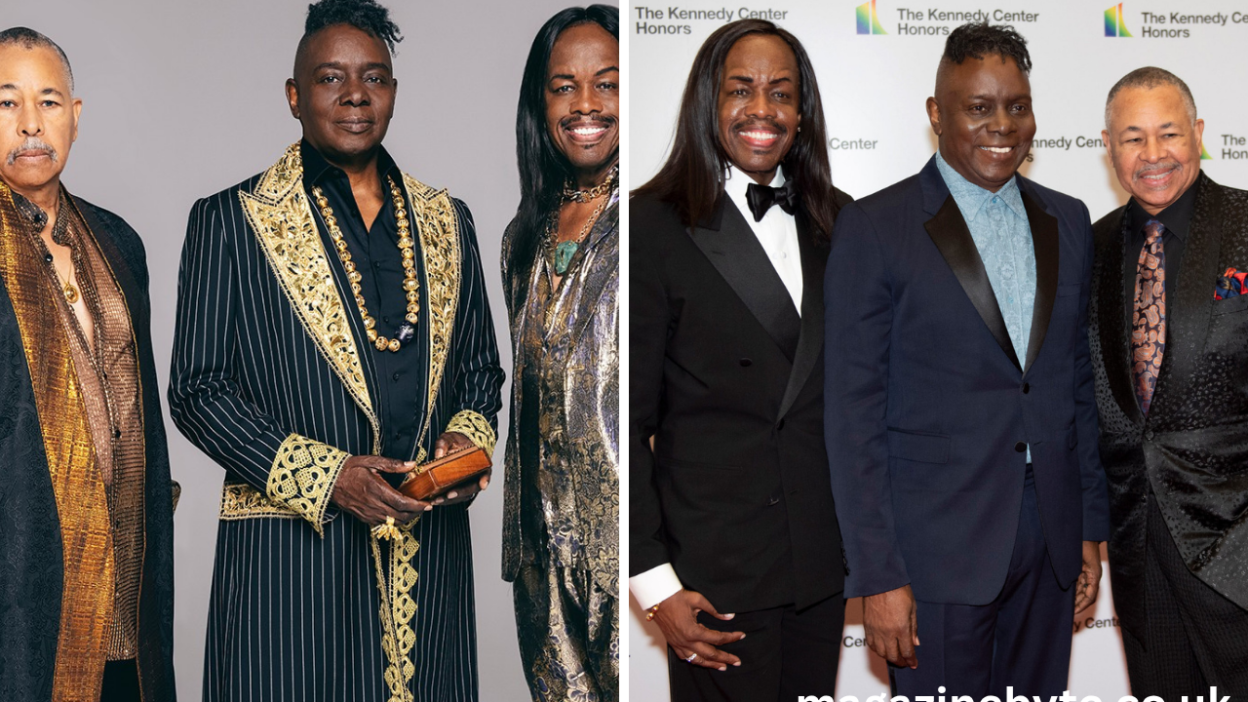
As of July 2026, the official performing line-up continues to be led by long-serving members Philip Bailey, Verdine White and Ralph Johnson. These three musicians provide a direct connection to the group’s classic period.
The wider touring line-up includes keyboard player and musical director Myron McKinley, guitarist Morris O’Connor, guitarist Serg Dimitrijevic, drummer and vocalist John Paris, vocalist and percussionist B. David Whitworth and background vocalist Oshun Shango Oshunde.
The current horn section includes saxophonist Gary Bias, trumpeter Bobby Burns Jr. and trombonist Reggie Young. Together, these musicians recreate the complex arrangements of the band’s classic recordings while also adding their own performance style.
The current group is not simply a tribute act. It includes original and long-serving members who helped shape Earth, Wind & Fire’s history. Their concerts continue to feature the band’s famous vocal harmonies, dance routines, percussion, guitar rhythms and horn arrangements.
Other Important Former Members
Many other musicians have performed with Earth, Wind & Fire during different periods. Roland Bautista played guitar during the group’s early development and later returned. Ronnie Laws, a talented saxophonist, also appeared in an early version of the reorganised band.
Jessica Cleaves, previously associated with the Friends of Distinction, brought strong female vocals to the group during the early 1970s. Her presence showed that Earth, Wind & Fire’s early line-ups were more varied than the version most audiences remember.
Johnny Graham became an important guitarist during the group’s classic period, while Sonny Emory contributed drums during later years. Sheldon Reynolds performed as a guitarist and vocalist, and Morris Pleasure worked as a bassist, keyboard player and musical director.
Other musicians connected with the touring group include Greg Moore, Robert Brookins, Gordon Campbell, Scott Mayo, Daniel de los Reyes, Bobby Gonzales, Kimberly Johnson, Michael McKnight, Ray Brown, Freddie Ravel, David Romero, Dick Smith, Vance Taylor, Lisa Vaughn and Vadim Zilbershtein.
These performers helped Earth, Wind & Fire continue through changing musical periods. Their contributions allowed the group to maintain the scale and quality of its live sound even when classic members were no longer available.
Rock and Roll Hall of Fame Members
Earth, Wind & Fire was inducted into the Rock and Roll Hall of Fame in 2000. The recognised members were Maurice White, Verdine White, Philip Bailey, Ralph Johnson, Larry Dunn, Al McKay, Andrew Woolfolk and Fred White.
This selection represented the musicians most strongly associated with the group’s breakthrough and classic years. Together, they created a body of work that influenced funk, disco, soul, pop, jazz and contemporary R&B.
The induction confirmed the band’s place among the most important groups in popular music. Earth, Wind & Fire was not successful only because of record sales. Its members introduced new musical ideas, promoted positive messages and changed expectations for live concert production.
The Band’s Biggest Songs and Member Contributions
“Shining Star” became Earth, Wind & Fire’s first major number-one hit in the United States. The song featured the group’s strong vocal harmonies, guitar rhythms and optimistic lyrics. It also helped the band gain wider recognition.
“September” became one of the most popular celebration songs ever recorded. Written by Maurice White, Al McKay and Allee Willis, it combined Verdine White’s bass, McKay’s guitar, powerful horns and joyful group vocals.
“Reasons” highlighted Philip Bailey’s extraordinary falsetto. The live version became especially famous because Bailey’s emotional vocal performance demonstrated the group’s ability to move from energetic funk to romantic soul.
“Boogie Wonderland,” recorded with the Emotions, reflected the disco era while maintaining Earth, Wind & Fire’s strong musicianship. “Fantasy” displayed the group’s spiritual and imaginative side, while “Let’s Groove” introduced a more electronic sound during the early 1980s.
Each song depended on the combined skills of several members. The group’s success came from teamwork rather than one performer dominating every recording.
Why the Earth, Wind & Fire Members Remain Influential
The members of Earth, Wind & Fire created music that was technically sophisticated but still enjoyable and accessible. Their songs often included complex chords, detailed horn arrangements and layered rhythms, yet they remained easy to sing and dance to.
The band also presented positive messages about love, unity, self-belief and spiritual growth. Maurice White wanted the music to make listeners feel hopeful. This approach helped the songs remain relevant during difficult social and political periods.
Earth, Wind & Fire also influenced concert production. Their shows featured colourful costumes, choreography, stage illusions, lighting effects and large musical arrangements. The group understood that a concert could be both a musical event and a visual experience.
Later performers in pop, R&B, funk and hip-hop have sampled, covered or referenced Earth, Wind & Fire’s music. The band’s influence can be heard in the work of artists who value live instrumentation, vocal harmony and danceable rhythms.
Conclusion
The history of the Earth, Wind & Fire members is the story of a constantly developing musical family. Maurice White created the original vision, but that vision became successful because of the talent and commitment of many musicians.
Philip Bailey’s falsetto, Verdine White’s bass, Ralph Johnson’s percussion, Larry Dunn’s keyboards, Al McKay’s guitar, Andrew Woolfolk’s saxophone and Fred White’s drumming all became essential parts of the classic sound. The Phenix Horns added another powerful layer, while numerous later members kept the music alive on stage.
Although Maurice White and several other important members have died, Earth, Wind & Fire continues to perform. Philip Bailey, Verdine White and Ralph Johnson remain the senior figures connecting modern audiences with the group’s golden era.
More than five decades after its formation, Earth, Wind & Fire remains much more than a band from the past. Its songs continue to appear at weddings, parties, films, television programmes and major public events. The changing line-up proves that while individual members are essential, the larger Earth, Wind & Fire spirit is built around unity, musical excellence and timeless joy.