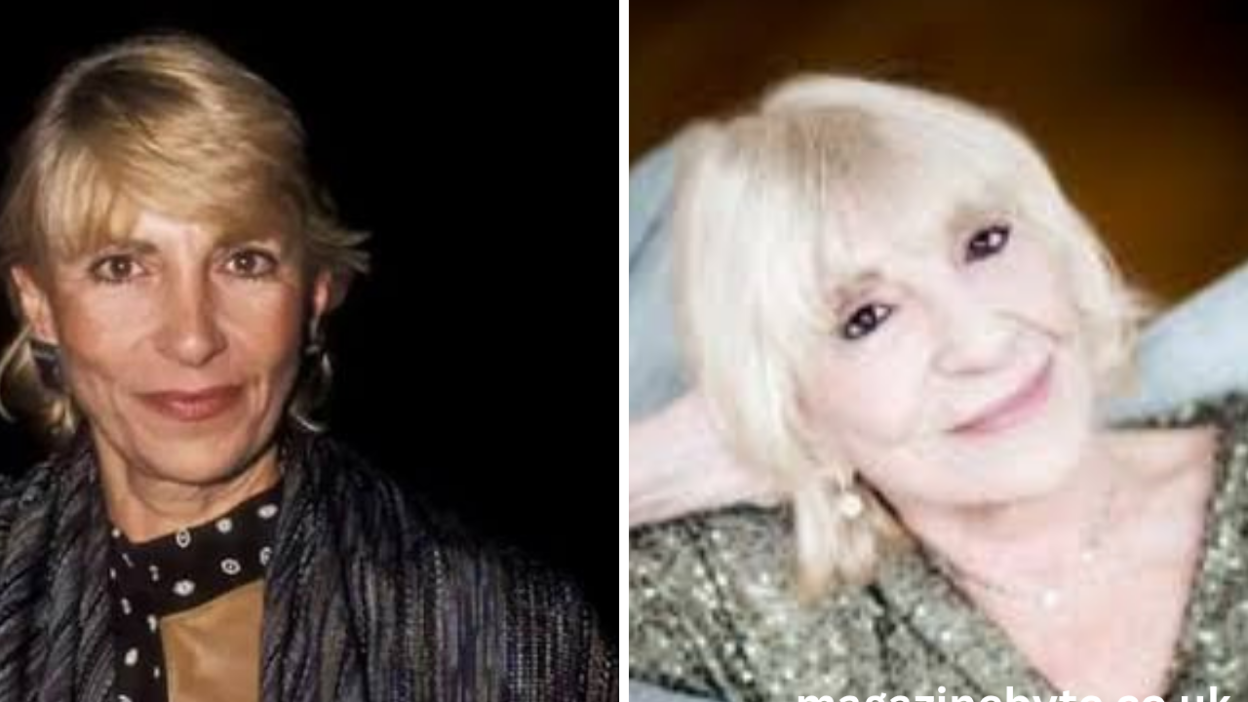
Casey Coates was far more than the former wife of a famous Hollywood actor. Although many people first discover her name through her marriage to Ted Danson, she built a meaningful identity of her own as an environmental designer, renewable-energy campaigner, documentary producer and photographer. Her professional life was closely connected to sustainable architecture, solar energy, ocean conservation and public environmental education.
Born as Cassandra Coates, she became known professionally as Casey Coates and, during her marriage, as Casey Coates Danson. She studied environmental design at Parsons School of Design and later used her training to promote energy-efficient buildings and solar-powered homes. Her work developed at a time when environmental architecture was still receiving limited mainstream attention.
Casey also helped establish organisations connected with marine protection and renewable energy. Through these projects, she encouraged people to think more carefully about fossil fuels, climate change, sustainable housing and the future of the planet. Her story combines personal challenges, public advocacy, creative work and a long-term commitment to environmental responsibility.
Casey Coates’ Early Life and Background
Casey Coates was born on 12 February 1937. She was raised on the North Shore of Long Island, New York, an area known for its coastal communities and historic homes. Her early surroundings may have contributed to her later interest in buildings, nature and the relationship between people and their environment.
She attended Great Neck High School before continuing her education at Lasell Junior College in Boston. Her life also included a period in London, where she reportedly lived for approximately one year. This international experience gave her exposure to different styles of architecture, design and city life before she returned to the United States.
After returning to New York, Casey initially followed a more conventional professional path. She worked in an office on Wall Street, but the corporate environment did not satisfy her creative interests. She eventually decided to change direction and pursue a field that allowed her to combine art, architecture, planning and environmental awareness.
That decision led her to Parsons School of Design, where she studied environmental design during the 1970s. Environmental design is a broad discipline that examines how buildings, landscapes and communities can be created to support human needs while responding responsibly to natural conditions.
Education at Parsons School of Design
Casey Coates studied at Parsons during a period when environmental concerns were becoming increasingly important in architecture. The global energy crisis of the 1970s had encouraged designers, governments and homeowners to consider alternatives to traditional energy use. Solar design, passive heating, insulation and climate-conscious construction were beginning to attract greater interest.
At Parsons, Casey developed skills in architectural drawing, site planning, building design and climate studies. Surviving records connected to her education include sketches, plans and environmental research from her student years. These materials show that her interest in sustainable design was not simply a later public campaign. It formed part of her formal professional training.
She completed her studies in 1975, graduating with honours and receiving a Bachelor of Fine Arts degree in Environmental Design. Her academic achievement helped prepare her for work in architecture and gave her the technical knowledge needed to discuss energy use in buildings with professional authority.
Casey remained connected to Parsons later in life. She served on the school’s Board of Governors and supported environmental education within the design community. Her continued relationship with the institution reflected the importance of design education in her career and personal mission.
Her Career as an Environmental Designer
After graduating, Casey worked with the architectural and design firm associated with Benjamin Thompson in Cambridge, Massachusetts. Thompson was known for combining modern design with active public spaces, urban development and human-centred architecture. Working in such an environment allowed Casey to develop practical experience beyond her university studies.
She also worked in New York before eventually moving to California. As her career developed, she became especially interested in solar energy and its possible use in homes and other buildings. She believed architecture could play an important role in reducing dependence on fossil fuels.
Casey reportedly designed and developed solar-powered properties, including two solar-powered homes. She also lived in a solar-powered residence in Los Angeles. At the time, solar technology was less accessible and far less common than it is today. Choosing to build and live in such a property demonstrated her willingness to apply environmental principles to her own life.
Her work focused not only on how buildings looked but also on how they consumed energy. This approach placed her among early supporters of environmentally responsible architecture in the United States.
Marriage to Ted Danson
Casey Coates married actor Ted Danson in 1977. At the time, Danson had not yet reached the extraordinary level of television fame he would later achieve through his role as Sam Malone in the popular sitcom Cheers.
Following their marriage, the couple moved to Los Angeles. Their relationship lasted for around 16 years and covered a period in which Ted Danson developed from a working actor into one of America’s most recognisable television stars.
Casey and Ted had two daughters. Their elder daughter, Kate Danson, was born on 24 December 1979. Their younger daughter has been identified differently in public sources, with some reports referring to her as Katrina and others calling her Alexis. Because of this inconsistency, biographies should avoid presenting either name as completely certain without clarification.
Casey generally maintained a much more private public profile than her husband. While Ted worked in television and film, she continued her environmental interests, design projects and charitable involvement.
The Stroke Casey Coates Suffered During Childbirth
One of the most difficult events in Casey Coates’ life occurred during the birth of her elder daughter. She suffered a serious stroke connected to childbirth and faced a long physical recovery.
The stroke changed the daily life of the family. Ted Danson took time away from parts of his career to help care for Casey and their newborn daughter. Reports about this period describe the recovery as emotionally and physically challenging for both partners.
Casey had to rebuild aspects of her physical strength following the medical emergency. Her recovery demonstrated determination and resilience, particularly because she continued to raise her family and participate in environmental work afterwards.
The experience also placed pressure on the marriage. Ted Danson later discussed how a medical crisis can change the roles and emotional balance within a relationship. However, the couple remained together for many years after the stroke and continued raising their daughters.
Casey Coates and the American Oceans Campaign
Casey Coates became deeply involved in ocean conservation during the 1980s. In 1987, she and Ted Danson helped establish the American Oceans Campaign.
The organisation was created to raise awareness about threats facing marine environments. These threats included pollution, offshore development, damage to ocean ecosystems, irresponsible fishing practices and weak environmental protection.
Ted became one of the organisation’s most visible public representatives, but Casey played an important role in its formation and environmental direction. Their involvement helped connect Hollywood influence with scientific and conservation concerns.
The American Oceans Campaign later became associated with Oceana, a major international organisation dedicated to protecting and restoring the world’s oceans. The campaign contributed to a wider movement that pushed marine conservation into public and political discussions.
Casey’s participation reflected her belief that environmental responsibility extended beyond housing and architecture. She recognised that oceans, climate systems, energy use and urban development were all connected.
Founding Global Possibilities
In 1996, Casey founded Global Possibilities, a nonprofit organisation focused on renewable energy and sustainable development. The organisation promoted solar power and other clean-energy technologies as practical alternatives to fossil fuels.
Global Possibilities concentrated particularly on the role of buildings in energy consumption. Homes, offices and public buildings require large amounts of electricity, heating and cooling. Casey argued that better design and greater use of renewable energy could reduce environmental damage without preventing people from living comfortably.
The organisation worked to educate the public about global warming, energy efficiency and green building methods. It also presented solar power as a realistic solution rather than an experimental technology.
Through Global Possibilities, Casey combined her education as a designer with her experience as an environmental campaigner. The organisation reflected the central idea of her career: that people could redesign their buildings and communities to create a cleaner and more sustainable future.
Documentary Production and Environmental Education
Casey Coates also used film as a way to communicate environmental ideas. She produced a documentary titled Who’s Got the Power?, which examined society’s dependence on fossil fuels and explored the potential of renewable energy.
The documentary discussed global warming, energy consumption and the use of solar technology in architecture. Its purpose was to make technical environmental issues understandable to a wider audience.
Rather than speaking only to architects or environmental experts, Casey wanted ordinary homeowners, students and community leaders to understand how energy decisions affected the planet. Documentary production allowed her to reach people who might never attend an environmental conference or study sustainable design.
The film reportedly received recognition for its educational and environmental value. It became another example of Casey using creative media to support public awareness.
Work With Environmental and Educational Organisations
Throughout her career, Casey held positions with several environmental, educational and charitable organisations. She served on the Board of Governors of Parsons School of Design and was also connected with the Southern California Institute of Architecture.
Her involvement in these institutions allowed her to support younger designers and encourage environmentally responsible thinking within architectural education.
Casey also chaired the board of the Environmental Media Association. The organisation works with the entertainment industry to promote environmental themes and sustainable production practices.
Through this position, she encouraged television and film creators to include environmental messages in popular media. She understood that entertainment could influence public attitudes, especially when environmental subjects were presented naturally through stories and familiar characters.
She was also associated with organisations supporting art, housing and Indigenous education. These roles demonstrated that her interests went beyond a single environmental project. She viewed sustainability as a social, cultural and educational issue.
Casey Coates’ Photography and Social Awareness
In addition to environmental design and documentary production, Casey pursued photography. One of her best-known creative projects focused on people experiencing homelessness in Los Angeles.
The project, titled Angels Unawares: Portraits of the Homeless in L.A., presented photographic portraits intended to show the humanity and individuality of homeless people. Instead of treating homelessness only as a statistic or political issue, the work focused on personal faces and experiences.
The project demonstrated Casey’s interest in social responsibility as well as environmental causes. Sustainable cities are not only about renewable energy and efficient buildings. They are also about whether communities provide dignity, safety and opportunity for vulnerable people.
Her photography received recognition, including attention connected with the Independent Publisher Book Awards. The work showed another side of Casey’s creative identity and strengthened her reputation as a person interested in both people and the planet.
Divorce From Ted Danson
Casey Coates and Ted Danson divorced in 1993. Their separation attracted considerable media attention because Ted had entered a highly publicised relationship with actress and television personality Whoopi Goldberg.
The divorce ended a marriage that had lasted approximately 16 years. Entertainment reports have frequently claimed that the settlement cost Ted Danson around $30 million. However, the exact financial amount has not been fully established through publicly available legal records, so it should be described as a reported figure rather than a confirmed fact.
After the divorce, Casey largely remained outside celebrity culture. She did not attempt to build her public identity around the separation or her former husband’s fame. Instead, she continued with environmental advocacy, renewable-energy education, design and photography.
This independence is an important part of her biography. Her relationship with Ted Danson was a major chapter in her personal life, but it did not define the full range of her professional achievements.
Casey Coates’ Children and Family Life
Casey was the mother of two daughters. Kate Danson later pursued acting and appeared in film and television projects. She also worked in areas connected to wellness and personal development.
Information about Casey’s younger daughter has remained more private. As a result, reports about her name and personal background are inconsistent. This lack of public information appears to reflect the family’s decision to protect certain details from media attention.
Despite her connection to a famous actor, Casey generally kept her family life relatively private. She did not build a celebrity brand or regularly appear in entertainment media.
Her family also remained connected to environmental activism. Ted Danson continued working with ocean-protection organisations after their divorce, suggesting that the conservation interests developed during their marriage had a lasting influence.
Casey Coates’ Death
Casey Coates died on 21 September 2025 in Venice, California. She was 88 years old. According to information shared by her family, she died peacefully with relatives close to her.
Some online biographies had previously published conflicting information about her birth year. However, family and memorial information identified her birth date as 12 February 1937.
Her death brought renewed attention to her life beyond her connection with Ted Danson. Tributes highlighted her work as a designer, environmental advocate, mother, photographer and supporter of renewable energy.
Casey Coates’ Legacy
Casey Coates’ legacy can be found in the environmental ideas she supported long before they became common topics. Today, solar panels, energy-efficient buildings and sustainable design are widely discussed. During the early stages of her career, however, these ideas were still developing and often faced public resistance.
She helped show that architecture could reduce environmental harm. She promoted renewable energy through education, documentary filmmaking and nonprofit work. She also contributed to the creation of an influential ocean-conservation campaign.
Her photography demonstrated compassion for people experiencing homelessness, while her educational positions allowed her to support future generations of designers and environmental thinkers.
Casey’s life is a reminder that a person connected to a major celebrity can have an important independent story. While her marriage to Ted Danson brought public attention, her environmental work gave her life a deeper and more lasting significance.
Conclusion
Casey Coates was an environmental designer, activist, documentary producer and photographer whose work centred on sustainability and social responsibility. She studied environmental design at Parsons, worked in architecture and became an early supporter of solar-powered homes.
She co-founded the American Oceans Campaign, established Global Possibilities and produced educational content about fossil fuels, global warming and renewable energy. She also supported environmental communication in film and television and used photography to highlight homelessness in Los Angeles.
Although she was widely recognised as Ted Danson’s former wife, Casey Coates created a meaningful professional identity of her own. Her commitment to clean energy, ocean conservation and responsible design remains the most important part of her story.
You may also read : Philip Bailey and the Famous Falsetto Voice