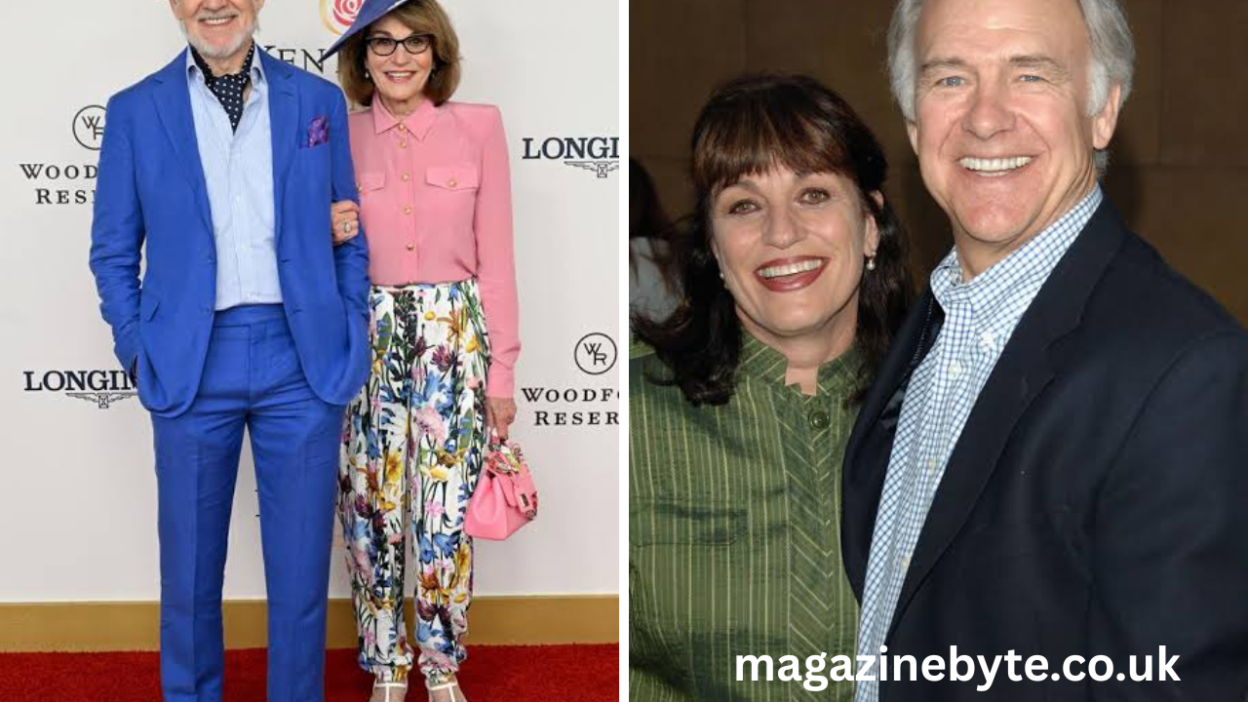
Gwynne Gilford is a name that sits quietly but meaningfully within the wider history of American entertainment. She is not an actress defined by a single blockbuster role or by constant media attention, yet her life connects several generations of Hollywood in a uniquely continuous line. Born into the legacy of classic cinema, she later built her own acting career during the television-dominated era of the 1970s and 1980s, appeared in cult films and popular TV series, and eventually stepped away from acting to pursue a professional life in psychotherapy.
Her identity today is often described through relationships—mother of actor Chris Pine, wife of actor Robert Pine, daughter of classic Hollywood actress Anne Gwynne—but such descriptions only capture part of her story. Gwynne Gilford’s life reflects the evolution of Hollywood itself: from studio-era glamour to television realism, from cult cinema to global franchise culture, and from public performance to private healing work. Understanding her biography requires looking at both her professional contributions and the deeper generational narrative she represents.
Early Life and Hollywood Roots
Gwynne Gilford was born as Gloria Gwynne Gilford in Los Angeles, California, on July 27, 1946. Growing up in Los Angeles meant she was surrounded by the entertainment industry from the beginning, but her exposure was not merely environmental—it was familial and deeply rooted in Hollywood history.
Her mother, Anne Gwynne, was one of the well-known screen figures of the 1940s. Anne Gwynne built a career during the studio system era, appearing in horror films, Westerns, and serial productions that defined mid-century American cinema. She also became recognized as one of Hollywood’s early “scream queens,” a term later used to describe actresses associated with horror genres.
Her father, Max M. Gilford, worked as an entertainment lawyer, which further strengthened the family’s connection to the film industry from a business and legal perspective. This combination of creative performance and industry knowledge shaped Gwynne Gilford’s early understanding of Hollywood as both an art form and a professional system.
Despite this environment, her upbringing was not framed as an automatic path into acting. Accounts of her family background often highlight that her mother was protective about show business, ensuring that Gwynne did not enter acting as a child. This decision may have contributed to her later approach, where acting became a chosen profession rather than a predetermined destiny.
Education and Preparation for Performance
Unlike many actors who enter the industry through childhood roles or early fame, Gwynne Gilford followed a more structured educational route. She attended the University of California, Los Angeles (UCLA), and also pursued studies in New York, exposing herself to different academic and artistic environments.
This educational foundation helped her approach acting as a craft rather than a family expectation. During the late 1960s, when she began transitioning into screen work, the American television industry was expanding rapidly. Networks were producing large volumes of episodic content, and actors trained in technique and adaptability were in high demand.
Gilford’s early preparation allowed her to fit naturally into this environment. Instead of being limited to one type of character or genre, she was able to move across different roles, demonstrating flexibility that became a defining characteristic of her career.
Early Television Career and Entry into Hollywood Acting
Gwynne Gilford’s entry into acting took place in the late 1960s and early 1970s, a period when television was becoming the dominant medium for American storytelling. Rather than leading film roles, many actors of her generation built careers through guest appearances on popular TV series.
She appeared in a wide range of shows including drama, crime, family, and medical series. Productions such as Gunsmoke, The Courtship of Eddie’s Father, Then Came Bronson, and Medical Center reflect the diversity of television programming at the time. These appearances gave her steady exposure and allowed her to work with different directors, scripts, and production environments.
In television culture, guest actors played an essential role. They provided emotional depth to episodic stories and helped maintain narrative variety across long-running series. Gilford’s work in these formats placed her within the backbone of American television storytelling, even if she was not always positioned as a leading star.
Film Career and Entry into Cult Cinema
Alongside television, Gwynne Gilford developed a parallel career in film, often appearing in projects that would later gain cult status. One of her earliest notable appearances was in Beware! The Blob (1972), a sequel to the 1958 science fiction horror film The Blob. In this film, she played Lisa Clark, a role that placed her within the growing trend of horror-comedy and science fiction experimentation of the early 1970s.
She later appeared in Satan’s School for Girls (1973), a television movie that blended suspense and horror themes. These types of productions were especially popular during the era, as TV movies allowed networks to explore darker or more experimental storytelling formats without the pressure of theatrical box office performance.
In 1980, Gilford appeared in Fade to Black, a psychological thriller that has since gained recognition as a cult classic. The film explores themes of obsession, identity, and cinematic fantasy, reflecting growing interest in psychological horror during that period. Her role as Officer Anne Oshenbull placed her within a narrative that has continued to attract critical analysis and fan attention over the decades.
These roles show that Gilford’s film career was not defined by mainstream stardom but by participation in culturally significant genre films that later developed strong fan communities.
Television Career Highlights and “A New Kind of Family”
One of Gwynne Gilford’s more notable television roles came in the sitcom A New Kind of Family (1979), where she portrayed Abby Stone, a divorced woman navigating family life. This role reflected broader social changes in American society during the late 1970s, when television began addressing themes such as divorce, single parenthood, and evolving family structures.
The series itself represented an attempt to modernize the traditional family sitcom format. Although it did not become a long-running hit, it remains a meaningful part of Gilford’s television legacy because it positioned her in a central role rather than a guest appearance.
Throughout her television career, she also appeared in shows such as Hart to Hart, CHiPs, The Rookies, and One Day at a Time. These roles demonstrate her consistent presence in mainstream television programming across multiple genres.
Her appearance in CHiPs is particularly notable because of its connection to her real-life family.
CHiPs and On-Screen Connection with Robert Pine
Gwynne Gilford’s husband, Robert Pine, is best known for his long-running role as Sergeant Joseph Getraer in the television series CHiPs, which aired from 1977 to 1983.
Gilford also appeared in the series as Betty Getraer, the wife of Pine’s character. This created a rare overlap between real-life marriage and on-screen storytelling, giving audiences a subtle glimpse of their personal connection through fictional narrative.
This kind of casting is relatively uncommon in television history and adds an interesting dimension to both actors’ careers. It also reflects the collaborative nature of Hollywood families, where professional and personal lives sometimes intersect in creative ways.
Marriage, Family Life, and Hollywood Partnership
Gwynne Gilford married Robert Pine in 1969, beginning a long-term partnership that has remained one of Hollywood’s more stable marriages. Their relationship spans decades of industry change, from the golden age of network television to the modern era of global film franchises.
Together, they have two children, including actor Chris Pine and Katherine Pine. Their family represents a multi-generational entertainment lineage spanning nearly a century.
What makes this family structure particularly significant is its continuity across eras. Anne Gwynne represented the studio system generation, Gwynne Gilford represents the television and transitional film era, and Chris Pine represents the modern global cinema era dominated by franchises and streaming platforms.
Gwynne Gilford as Chris Pine’s Mother and Industry Influence
Gwynne Gilford is widely recognized in public discussions as the mother of Chris Pine, but her influence extends beyond simple family association. Chris Pine has occasionally referenced the guidance and perspective he received from his parents, particularly regarding professionalism in acting and emotional resilience in a competitive industry.
One well-known insight attributed to her perspective is the idea that audiences only see the final performance, not the struggle behind it. This reflects a grounded understanding of acting as a discipline rather than a glamorous experience.
Her influence can also be seen in Chris Pine’s balanced approach to fame. Unlike many modern celebrity narratives driven by constant publicity, he has often maintained a degree of privacy and professional focus, something likely shaped by observing both of his parents’ careers.
Transition from Acting to Psychotherapy
After her acting career, Gwynne Gilford transitioned into psychotherapy, a field that represents a significant shift in professional identity. Rather than remaining within the entertainment industry, she chose a path centered on mental health, emotional support, and human development.
This transition reflects a deeper intellectual and emotional evolution. Acting and psychotherapy may appear unrelated on the surface, but both involve understanding human behavior, emotional expression, and psychological motivation.
In psychotherapy, however, the focus shifts from performance to healing. Instead of portraying characters, one works directly with individuals to address personal challenges, emotional struggles, and behavioral patterns. Gilford’s move into this field suggests a long-term interest in human psychology that extends beyond performance arts.
Her daughter, Katherine Pine, also pursued psychotherapy, indicating that this intellectual and professional shift became part of the family’s broader identity.
Family Legacy: Anne Gwynne to Chris Pine
The Pine-Gilford family represents a rare three-generation Hollywood lineage:
- Anne Gwynne – classic film era
- Gwynne Gilford – television and cult film era
- Chris Pine – global franchise era
This progression illustrates how Hollywood has evolved structurally and culturally over time. Each generation faced different industry conditions: studio contracts, network television systems, and global streaming franchises.
Despite these changes, the family maintained continuity in performance-based careers, suggesting a strong artistic tradition balanced with professional adaptability.
Acting Style and Professional Identity
Gwynne Gilford’s acting style can be understood through her versatility rather than a single defining role. She was not typecast into one character category but instead moved across genres including drama, horror, comedy, and procedural television.
This adaptability was essential in the television ecosystem of her time. Actors needed to quickly adjust to different scripts, tones, and production styles, often within short filming schedules. Gilford’s consistent presence across multiple series indicates reliability and professional competence.
Her film work, particularly in genre cinema, shows a willingness to engage with experimental storytelling forms that later gained cult appreciation. This dual presence in television and film reflects a balanced career typical of many working actors of her era.
Public Image and Privacy
Unlike many contemporary celebrities, Gwynne Gilford has maintained a relatively private public profile. She is not a frequent subject of media interviews or public appearances, and much of her visibility today comes through family-related coverage or retrospective interest in her film and television work.
This privacy contributes to a perception of groundedness. Rather than pursuing continuous fame, she appears to have shifted focus toward personal and professional fulfillment outside the entertainment spotlight.
Cultural and Industry Significance
Gwynne Gilford’s significance lies not in blockbuster stardom but in representational continuity. She embodies:
- The transition from studio-era legacy to television acting
- The evolution of genre cinema in the 1970s and 1980s
- The role of working actors in sustaining episodic television
- The intersection of Hollywood family generations
- The shift from entertainment performance to psychological practice
Her life illustrates how Hollywood careers are often multidimensional, extending beyond what appears on screen.
Conclusion
Gwynne Gilford’s biography is best understood as a layered narrative rather than a single career summary. She is an actress, a television performer, a participant in cult cinema, a member of a historic Hollywood family, a spouse and parent within another entertainment dynasty, and ultimately a professional who transitioned into psychotherapy.
Her story connects classic Hollywood through Anne Gwynne, television-era storytelling through her own acting career, and modern cinematic fame through Chris Pine. Yet beyond these connections, she represents something equally important: the possibility of transformation beyond public identity.
In a culture that often defines people by their most visible roles, Gwynne Gilford stands as an example of quiet evolution—moving from screen performance to personal healing work, while remaining part of a broader legacy that continues to shape Hollywood history.
You may also read :Entry into Walmart and Early Corporate Career