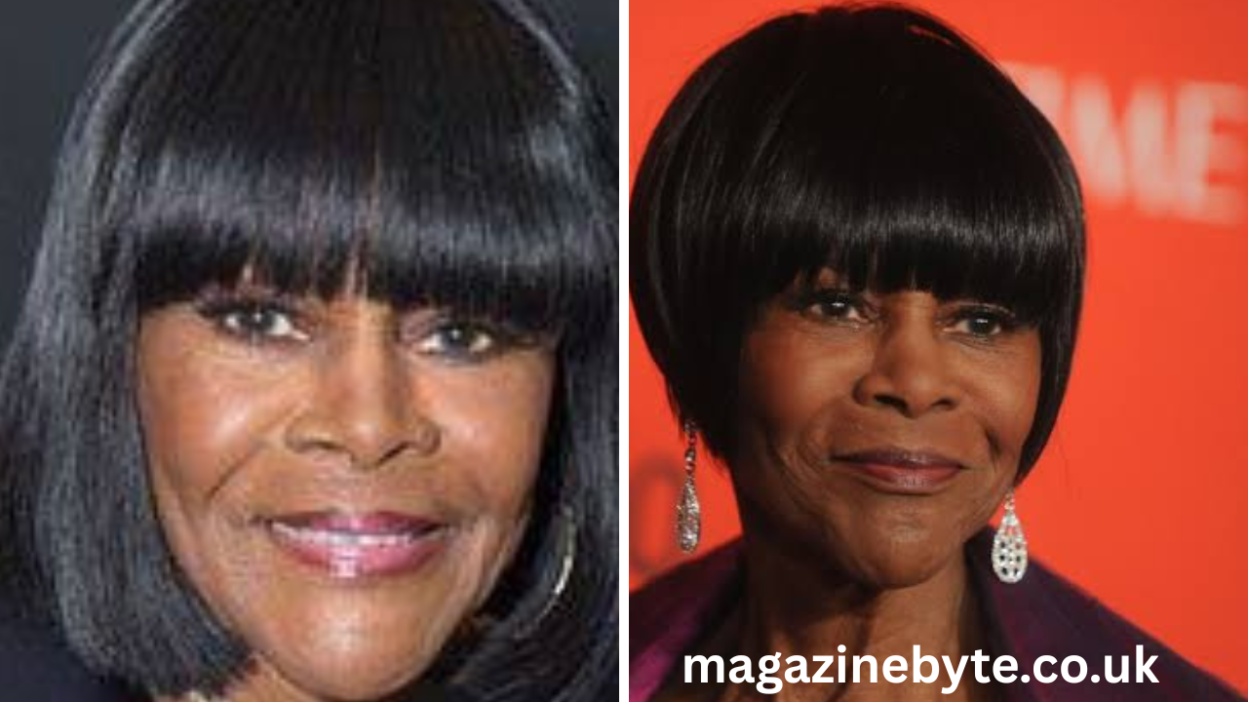
Cicely Johnston is an American former model, airline stewardess, and occasional actress who became widely known through her long marriage to actor Grady Demond Wilson. Wilson achieved national fame for playing Lamont Sanford in the popular television sitcom Sanford and Son, while Johnston maintained a much quieter life away from the entertainment industry.
Interest in the keyword “Cicely Johnston model” has grown because relatively little verified information about her career is publicly available. Numerous websites describe her as a model, celebrity wife, actress, and private family figure, but many of those profiles repeat unconfirmed details. The most dependable information presents Johnston as a former airline stewardess who later worked as a model, appeared briefly in a 1974 film, married Demond Wilson in the same year, and raised six children with him.
Unlike many people connected to famous actors, Johnston did not build a highly visible public identity around her husband’s success. She rarely appeared in interviews, did not actively promote herself through the media, and remained largely outside Hollywood’s celebrity culture. Her story is therefore closely connected to themes of privacy, marriage, family life, modeling, and the personal challenges that can accompany fame.
Who Is Cicely Johnston?
Cicely Loise Johnston is best known as the longtime wife of actor, author, and minister Demond Wilson. Before her marriage became a subject of public interest, she reportedly worked as an airline stewardess and later entered modeling.
Although her modeling background is regularly mentioned in reputable profiles of Wilson, extensive details about that career have never been widely published. There is no well-established public record identifying her modeling agency, major advertising campaigns, magazine covers, runway appearances, or fashion-industry awards.
This absence of documentation does not mean that Johnston was not a working model. Many models, particularly those working during the 1960s and 1970s, completed commercial, promotional, catalog, local fashion, or print assignments without developing a permanent online record. Modeling credits from that period were not always carefully preserved or digitized.
Johnston’s public reputation is therefore not based on a catalog of famous fashion achievements. Instead, she is remembered as a woman who worked in modeling and aviation before becoming part of a prominent entertainment family.
Cicely Johnston’s Early Life
Very little verified information has been published about Cicely Johnston’s childhood, parents, education, or early ambitions. Her exact date of birth has also not been firmly established through a reliable public record.
A newspaper profile published in 1986 described Johnston as being 41 years old at that time. That information would place her birth around 1944 or 1945. Several entertainment biography websites list 1945 as her birth year, but such claims should be treated cautiously because they are rarely accompanied by a primary document or direct statement from Johnston.
Her birthplace is similarly uncertain. Some online profiles identify Palm Springs or another California location, but the available evidence more clearly connects the family to California later in life rather than proving that Johnston was born there.
The uncertainty surrounding these basic biographical facts reflects Johnston’s private nature. She did not appear to seek media attention, publish an autobiography, maintain a public-facing career archive, or give detailed interviews about her early life.
Cicely Johnston’s Career as an Airline Stewardess
Before becoming known as a model, Johnston reportedly worked as an airline stewardess, the professional term commonly used at the time for what is now called a flight attendant.
Working as a stewardess during the mid-20th century was often viewed as a prestigious and competitive occupation. Airlines frequently imposed strict requirements concerning appearance, grooming, communication skills, physical health, and customer service. Flight attendants were expected to remain calm under pressure, assist passengers, represent the airline professionally, and follow detailed safety procedures.
The career also provided opportunities to travel and interact with people from different backgrounds. For some women, airline employment served as a pathway into modeling, advertising, public relations, or entertainment because airlines placed considerable emphasis on presentation and professionalism.
Johnston’s transition from stewardess to model would therefore have been consistent with the professional culture of that era. Both occupations required confidence, poise, adaptability, and the ability to work in highly visible environments.
However, the exact airline for which she worked, the length of her employment, and the routes she may have served have not been reliably documented in the public record.
Cicely Johnston’s Modeling Career
Cicely Johnston is frequently described as a former model, making modeling one of the central elements of her public biography. Despite this consistent description, few specific records of her modeling assignments are readily available.
Her work may have included commercial photography, fashion presentations, catalog modeling, beauty advertising, or promotional assignments. These possibilities are reasonable within the historical context of modeling, but they should not be presented as confirmed parts of her résumé without supporting evidence.
The modeling industry of Johnston’s era differed greatly from today’s digitally documented profession. Models could work regularly without becoming internationally famous. Their images might appear in regional advertisements, department-store campaigns, brochures, catalogs, airline promotions, or local fashion shows without their names being prominently credited.
Records from smaller agencies and commercial clients were often discarded, lost, or never transferred to digital archives. As a result, a former model may have had a genuine professional career while leaving behind only a limited searchable footprint.
No dependable information currently identifies Johnston as a supermodel, major runway star, international fashion icon, or the face of a famous luxury brand. Descriptions presenting her as one of the leading models of her generation appear to go beyond the evidence available.
The most responsible way to describe her career is that she worked as a model after being employed as a stewardess, but specific details concerning clients, agencies, campaigns, and professional milestones remain private or undocumented.
Cicely Johnston’s Appearance in Caged Heat
Johnston also has a connection to the motion-picture industry. She appeared in the 1974 film Caged Heat, which was the first theatrical feature directed by Jonathan Demme.
The film is a women-in-prison exploitation drama about inmates resisting the cruelty and corruption of a prison administration. It later developed a cult following and became notable in film history partly because of Demme’s later success as a director.
Johnston is listed in the cast as playing a character named Cicely. The role appears to have been small, and sources differ over whether the performance was formally credited on screen.
Her involvement in Caged Heat did not lead to a widely documented acting career. There is no substantial evidence that she pursued numerous television roles, signed a major acting contract, or attempted to establish herself as a full-time Hollywood performer.
The appearance nevertheless remains an important part of her public record because it provides a documented connection between her modeling background and the entertainment industry. It also distinguishes her from celebrity spouses who never participated in film production.
How Cicely Johnston Met Demond Wilson
The exact circumstances in which Cicely Johnston and Demond Wilson first met have not been thoroughly documented. Published accounts focus more on their marriage and family life than on the beginning of their relationship.
By the time they married, Wilson had already become a recognizable television actor. His breakthrough arrived through Sanford and Son, in which he played Lamont Sanford opposite comedian Redd Foxx.
The series premiered in 1972 and quickly became one of the most recognizable American sitcoms of the decade. Wilson’s character was the practical, ambitious, and frequently frustrated son of Fred Sanford, a widowed junk dealer known for his schemes, insults, and dramatic behavior.
Because Wilson was experiencing major professional success during the early years of their marriage, Johnston entered a relationship shaped by celebrity attention, demanding production schedules, financial opportunities, and the pressures of Hollywood.
Cicely Johnston and Demond Wilson’s Marriage
Cicely Johnston married Grady Demond Wilson on May 3, 1974. Their marriage lasted for more than five decades, continuing until Wilson’s death in January 2026.
A marriage of this length is especially notable in the entertainment world, where professional travel, media attention, unpredictable schedules, and public scrutiny can create significant strain.
Johnston and Wilson’s relationship was not presented as a perfect Hollywood romance. Wilson later spoke candidly about personal failures and serious difficulties that affected the marriage during the height of his fame.
According to a 1986 profile, Wilson acknowledged that he became involved with drugs and extramarital affairs. He also described emotional dissatisfaction despite his professional achievements. These problems damaged the relationship, and Johnston reportedly became depressed and temporarily left him.
The couple eventually reconciled. Their decision to remain together suggests that the marriage went through a prolonged process of change rather than following a simple celebrity narrative of success or separation.
Johnston’s own perspective was rarely reported directly. Much of the public information about their marital difficulties came from Wilson’s statements. It is therefore important not to assume Johnston’s private thoughts, motivations, or emotional experience beyond what was actually published.
Life During Demond Wilson’s Television Fame
Demond Wilson’s success on Sanford and Son made him one of the most visible Black television actors of the 1970s. The program attracted large audiences and contributed to broader representation of Black families and working-class life on American television.
Celebrity brought financial rewards, but Wilson later suggested that professional success did not produce emotional stability. The pressures surrounding fame reportedly affected his behavior, marriage, and sense of purpose.
For Johnston, life with a famous actor likely involved public attention while she was also managing the responsibilities of a growing family. However, she did not establish herself as a regular figure in celebrity magazines or entertainment television.
Her relative absence from publicity may have been intentional. Rather than using Wilson’s fame to develop a public brand, Johnston remained focused on family life and personal privacy.
This distinction is important when evaluating her biography. She was connected to Hollywood but did not appear to embrace celebrity as a permanent occupation.
Cicely Johnston’s Children
Cicely Johnston and Demond Wilson had six children together. Reports published after Wilson’s death identified them as Nicole, Melissa, Christopher, Demond Jr., Tabitha, and Sarah.
Johnston’s role as a mother became a major part of her life, especially as the family moved away from the most intense period of Hollywood activity.
The couple generally protected their children from excessive media exposure. Although some of their names have appeared in obituaries and family summaries, there is limited reliable information about each child’s personal life, education, profession, or relationships.
Numerous celebrity biography websites attempt to describe the family in detail, but the information is often inconsistent. Some websites list different numbers of children, use incomplete names, or repeat facts without showing where they originated.
The strongest available accounts support the conclusion that Johnston and Wilson raised six children and maintained a family-centered life for many years.
The Family’s Move Away From Hollywood
As Wilson’s priorities changed, the family moved away from the center of the entertainment industry. A 1986 report indicated that they relocated from Los Angeles to Mission Viejo, California.
Moving away from Hollywood appears to have represented more than a change of address. It occurred during a period when Wilson was reconsidering his lifestyle, marriage, faith, and professional identity.
A quieter environment may have offered Johnston and the children greater privacy and distance from the pressures associated with television fame. The family’s relocation also reflected Wilson’s gradual transition from actor to religious minister and author.
Later reports connected Wilson and Johnston to California’s Coachella Valley region. These geographical connections have occasionally caused online writers to assume that Johnston was born in Palm Springs or another nearby community, but residence in an area does not establish birthplace.
Demond Wilson’s Religious Transformation
Demond Wilson underwent a major religious transformation after his most famous years as an actor. He became an ordained minister and dedicated increasing attention to Christian teaching, writing, and public speaking.
Wilson frequently described faith as central to his recovery from the destructive aspects of celebrity life. His spiritual development also became closely linked to the survival of his marriage.
While Johnston did not build an equally public religious platform, she remained married to Wilson throughout his transition into ministry. She therefore shared family life with a man whose identity changed from television star to preacher, author, and religious speaker.
Wilson wrote books addressing faith, family, social issues, and personal transformation. His later public image was significantly different from the youthful television persona associated with Lamont Sanford.
Johnston’s continued presence throughout these changes demonstrates the breadth of their shared history. Their marriage encompassed television fame, personal crisis, reconciliation, parenthood, religious conversion, relocation, and later life.
Why Cicely Johnston Chose a Private Life
Cicely Johnston’s limited public visibility appears to have been one of the defining characteristics of her life. She did not regularly attend highly publicized celebrity events, provide frequent interviews, release personal memoirs, or maintain an obvious verified social-media presence.
Privacy can be particularly valuable for the spouse of a famous entertainer. Public attention often creates pressure to discuss intimate details, respond to rumors, and perform a public version of family life.
Johnston appears to have followed a different path. She allowed Wilson’s career to remain the main subject of public interest while keeping much of her own story outside the media.
This privacy has also created challenges for researchers. Because so little first-person material exists, later writers have often filled gaps with assumptions. Details concerning her education, physical measurements, religion, modeling earnings, net worth, and birthplace are commonly repeated without credible documentation.
A responsible biography must recognize that not every missing detail should be replaced by speculation. Johnston’s decision not to publicize her life deserves the same respect as the confirmed facts that are available.
Cicely Johnston’s Age
Cicely Johnston’s precise age remains uncertain because her complete date of birth has not been confirmed through a strong public source.
The 1986 description of her as 41 suggests that she was born in approximately 1944 or 1945. If that information was accurate, she would be in her early eighties in 2026.
Some websites display May 3, 1974, as her birthday. This appears to be a confusion with her wedding date. Using the marriage date as her birth date has caused certain automated profiles to calculate an obviously inaccurate age.
Other websites confidently provide a specific birth year without identifying the origin of the information. Until a reliable document, direct interview, or family statement becomes available, an approximate birth period is more accurate than an unsupported exact date.
Cicely Johnston’s Height and Physical Appearance
Online searches for Cicely Johnston frequently include questions about her height, weight, eye color, and other physical characteristics. These details are especially common in articles about former models.
However, no reliable public record clearly verifies her height or body measurements. Biography websites may provide exact figures, but those numbers often appear without sourcing and may have been copied from one another.
Photographs connected to Johnston show an elegant woman with the polished appearance associated with professional modeling, but photographs cannot establish precise measurements.
Her appearance should not be exaggerated into evidence of specific modeling achievements. The confirmed point is that she worked as a model, while exact physical statistics remain undocumented.
Cicely Johnston’s Net Worth
Cicely Johnston’s personal net worth is unknown. Some entertainment websites estimate that she possesses between one million and several million dollars, but these figures are not supported by public financial disclosures.
Calculating the personal wealth of a private individual is difficult, particularly when that person does not operate a public company, publish business records, disclose investments, or discuss finances in interviews.
Johnston may have earned money from airline work, modeling, acting, shared family assets, property, or other private activities. However, no dependable evidence establishes the value of those earnings.
Demond Wilson earned income through television, film, theater, writing, ministry, and public appearances. Yet his career earnings cannot simply be assigned to Johnston as an individual net-worth figure.
Claims about her wealth should therefore be described as speculative rather than factual.
Cicely Johnston’s Relationship With the Media
Johnston’s relationship with the media was distant and controlled. Most newspaper and entertainment references to her appeared because she was Wilson’s wife, not because she was promoting an independent public project.
This pattern differs from that of many modern celebrity spouses, who may become influencers, reality television personalities, entrepreneurs, or media commentators.
Johnston lived much of her adult life before social media transformed celebrity culture. During the height of Wilson’s career, public access to actors and their families was largely mediated through newspapers, magazines, television interviews, and official publicity.
Even within that system, Johnston kept a low profile. As a result, her name became familiar without her personality becoming widely known.
This limited media record explains why photographs and basic biographical facts about her are relatively scarce.
Demond Wilson’s Later Career
After Sanford and Son, Demond Wilson continued acting in television and film. He appeared in productions such as Baby… I’m Back! and The New Odd Couple, while also pursuing stage work and other entertainment projects.
His portrayal of Lamont Sanford remained the defining role of his career. The character’s relationship with Fred Sanford became one of television’s most memorable father-and-son dynamics.
Wilson later placed greater emphasis on ministry and writing. His public discussions often addressed faith, morality, family responsibility, addiction, and the emptiness he experienced during periods of material success.
Johnston remained his spouse throughout these later career phases. Her story is therefore connected not only to the golden era of American sitcoms but also to Wilson’s religious and personal reinvention.
Cicely Johnston After Demond Wilson’s Death
Demond Wilson died on January 30, 2026, at the age of 79. Reports stated that he died from complications related to cancer at his home in California’s Coachella Valley.
Johnston survived her husband, along with their six children. Their marriage had lasted nearly 52 years.
Wilson’s death renewed public interest in Johnston because obituaries described her as his wife and reviewed the history of their family. The renewed attention also led to increased searches concerning her age, modeling career, children, and current life.
No dependable report available at the time indicated that Johnston had died. Nevertheless, her private lifestyle means that detailed updates about her health, residence, and activities should not be expected unless released by the family.
The death of her husband marked the end of one of the longer marriages associated with a major American television star of the 1970s.
The Historical Context of Cicely Johnston’s Modeling Work
Understanding Johnston’s modeling career requires consideration of the era in which she worked. Black models faced significant barriers in American fashion and advertising during the mid-20th century.
Major agencies, magazines, designers, and advertisers often provided fewer opportunities to Black women. Even talented models could be excluded from prominent campaigns or limited to specialized markets.
The late 1960s and 1970s brought important changes. Black models became increasingly visible in fashion magazines, runway shows, beauty campaigns, and mainstream advertising. Events such as the 1973 Battle of Versailles fashion show helped demonstrate the talent and international appeal of Black American models.
Johnston’s modeling experience existed within this broader period of cultural change. Although her individual assignments remain undocumented, her identification as a Black former model places her professional background within an industry that was gradually becoming more inclusive.
It would be inaccurate to attach Johnston to specific historic fashion events without evidence. Still, the context helps explain why preserving the careers of lesser-documented models is important. Many contributed to changes in representation without receiving the lasting recognition given to a small number of famous names.
Cicely Johnston’s Connection to Black Television History
Johnston did not star in Sanford and Son, but her life was closely connected to an actor who helped shape Black television history.
The sitcom emerged during a period when American television was slowly expanding its representation of Black characters and families. While the series relied on broad comedy, it also placed Black working-class characters at the center of a highly successful network program.
Demond Wilson’s Lamont Sanford was intelligent, ambitious, and often determined to build a life beyond the family junk business. His interactions with Fred created humor while exploring generational conflict, economic struggle, loyalty, and family responsibility.
As Wilson’s wife, Johnston experienced the private consequences of his public success. Her family story offers a reminder that television fame affects spouses and children as well as performers.
The difficulties Wilson later admitted—including addiction, infidelity, and emotional distress—reveal the contrast between the laughter audiences saw on television and the problems occurring behind the scenes.
Common Myths About Cicely Johnston
Many online articles about Cicely Johnston contain conflicting information. The uncertainty surrounding her private life has allowed incorrect claims to spread easily.
One common error concerns her birth date. Some profiles mistake her May 3, 1974, wedding date for the date she was born. Other sources list different marriage years despite stronger evidence supporting 1974.
Her birthplace is also presented inconsistently. California locations are often named without documentation, possibly because Johnston and Wilson lived in the state for many years.
Another common claim is that Johnston accumulated a specific multimillion-dollar fortune through modeling. Without contracts, financial statements, business ownership records, or direct disclosures, such estimates cannot be verified.
Websites also invent or repeat details about her height, education, parents, siblings, religion, and professional accomplishments. Repetition does not transform an unsourced claim into a fact.
The safest biography distinguishes between established information, reasonable historical context, and details that remain unknown.
Why People Search for Cicely Johnston Model
The phrase “Cicely Johnston model” attracts interest for several reasons. Some readers discover her while researching Demond Wilson and want to know more about his wife. Others encounter her name in connection with Caged Heat or articles about celebrity marriages.
Her identity as a former model also creates curiosity because there are few accessible records of her work. Readers naturally want to see photographs, magazine appearances, advertisements, and career highlights.
The lack of information makes her story more intriguing, but it also encourages low-quality websites to publish speculative biographies.
Her long marriage adds another dimension of interest. Johnston and Wilson remained together despite serious personal difficulties, major lifestyle changes, and decades of public attention.
She also represents a type of celebrity-connected figure who became known without actively pursuing fame. Her public identity was shaped by modeling, marriage, motherhood, film history, and privacy rather than continuous media exposure.
Cicely Johnston’s Legacy
Cicely Johnston’s legacy is not defined by an extensive list of screen credits or internationally famous modeling campaigns. Instead, it rests on a combination of professional experience, family commitment, endurance, and discretion.
She worked as a stewardess and model during a period when both fields placed demanding expectations on women. She participated in a film that later gained cult and historical significance. She married one of the best-known sitcom actors of the 1970s and raised six children with him.
Her marriage survived periods of addiction, infidelity, depression, separation, religious transformation, and career change. Although the public largely heard Wilson’s account of these events, Johnston’s continued presence formed an essential part of the family’s story.
Her privacy should also be viewed as part of her legacy. In an environment where personal relationships are frequently commercialized, she largely resisted turning her family life into entertainment.
Final Thoughts on Cicely Johnston
Cicely Johnston is best described as a former airline stewardess, model, occasional actress, wife, and mother. She appeared in Caged Heat in 1974 and married Demond Wilson on May 3 of the same year. Together, they had six children and remained married until Wilson’s death on January 30, 2026.
Her exact birth date, birthplace, education, modeling clients, agency representation, physical measurements, and personal net worth have not been firmly established by reliable public evidence.
The lack of these details should not reduce her life to a collection of online guesses. It instead demonstrates how successfully she maintained her privacy despite spending more than five decades beside a famous actor.
For readers researching “Cicely Johnston model,” the most accurate conclusion is that she had a genuine background in modeling and aviation but chose not to develop a highly public career. Her enduring public importance comes from the intersection of her own professional experience, her brief involvement in film, her long marriage to Demond Wilson, and her role in a family shaped by fame, hardship, faith, and personal transformation.
You may also read : Chelsy Bakula’s Siblings