The name Midori Fujiwara has attracted growing online interest, particularly because it is associated with Canadian actor, musician, and television creator Hugh Dillon. However, searching for this name reveals a complicated picture. Midori Fujiwara is not one uniquely identifiable public figure with a single career and biography. Instead, the name appears in entertainment coverage, Japanese art records, local politics, academic databases, film credits, and public-event archives.
This overlap has caused a considerable amount of confusion online. Information belonging to one Midori Fujiwara is sometimes incorrectly attributed to another. The Japanese visual artist has occasionally been confused with Hugh Dillon’s wife, while political, academic, and film-related records have also been grouped together without sufficient evidence. A responsible biography must therefore distinguish verified information from assumptions and separate the individuals who share the same name.
Who Is Midori Fujiwara?
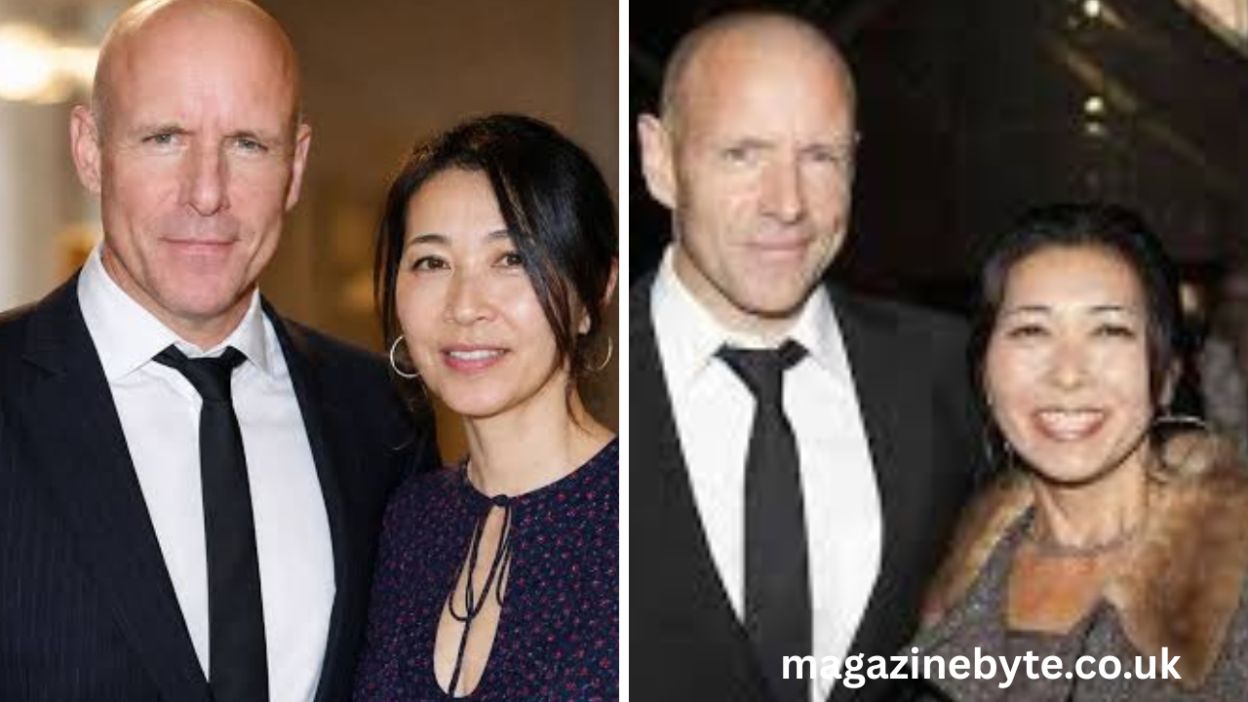
In English-language entertainment searches, Midori Fujiwara is best known as the wife of Hugh Dillon. Dillon is a Canadian musician, actor, writer, producer, and television creator associated with the rock band Headstones and the crime drama series Mayor of Kingstown. Midori has appeared beside him at public entertainment events, and Dillon has referred to her as his wife during interviews.
Despite this public connection, Midori Fujiwara has maintained a relatively private life. She does not appear to have built a public identity through frequent interviews, social-media promotion, celebrity endorsements, or entertainment-industry publicity. Most of what can be reliably said about her comes from Hugh Dillon’s interviews, event photography, and public appearances.
At the same time, the name belongs to several other people in Japan, including an established painter, a municipal politician, a former local politician, a film-project participant, and individuals appearing in academic or institutional records. These people should not automatically be treated as the same person.
Midori Fujiwara and Hugh Dillon
The most widely discussed Midori Fujiwara is the spouse of Hugh Dillon. Dillon has openly acknowledged her as his wife, and she has appeared with him at industry screenings and film events. Their relationship has received attention mainly because of Dillon’s successful career rather than because Midori has actively sought celebrity status.
Dillon is known for working across music, film, and television. He became prominent as the lead singer of the Canadian rock band Headstones and later developed a substantial acting career. His screen credits include roles in Flashpoint, Durham County, Yellowstone, The Killing, Wind River, and Mayor of Kingstown. He also co-created Mayor of Kingstown with Taylor Sheridan.
As Dillon’s professional profile increased, public curiosity about his personal life also grew. Midori Fujiwara consequently became the subject of online biography articles, many of which attempted to fill the gaps created by her private lifestyle. Some of those articles provide highly specific claims about her age, birthplace, children, profession, family background, and marriage. However, many of those details are not supported by direct interviews, official profiles, or established publications.
The most reliable conclusion is that Midori is Hugh Dillon’s wife, has attended public events with him, and has played an important role in his personal life. Beyond those facts, caution is necessary.
Midori Fujiwara’s Public Appearances
Midori Fujiwara has accompanied Hugh Dillon to several public entertainment events. One documented appearance took place in New York City on May 20, 2024, when the couple attended a special screening connected to Mayor of Kingstown. Editorial event photographs identified both Midori Fujiwara and Hugh Dillon by name.
She has also been photographed with Dillon at film-industry gatherings, including events associated with the Toronto International Film Festival. One notable appearance was connected to the documentary Long Time Running, which focuses on the Canadian rock band The Tragically Hip and its final tour.
These appearances indicate that Midori supports Dillon’s work and occasionally joins him at major professional occasions. They do not, however, suggest that she is attempting to establish an independent celebrity career. She generally appears as Dillon’s partner rather than as a featured performer, producer, executive, or media personality.
Her limited presence at public events may also explain why photographs of her attract significant search interest. Because she rarely appears in interviews or promotional material, each confirmed appearance becomes an important reference point for people trying to identify her.
Her Role in Hugh Dillon’s Personal Journey
Hugh Dillon has discussed difficult periods in his life, including addiction, instability, and the challenges that accompanied his early music career. In interviews, he has acknowledged the importance of personal support during his recovery and development.
Midori Fujiwara has been described as part of the support system that helped him navigate those periods. This aspect of their relationship is more meaningful than the superficial attention often given to celebrity spouses. Rather than being known for publicity, Midori appears to have had a stabilizing presence in Dillon’s private life.
Dillon’s career has involved major transitions. He moved from being the frontman of a hard-edged rock band to becoming a respected dramatic actor and television creator. Such transitions often involve professional uncertainty, long production schedules, travel, and intense personal pressure. His references to his wife suggest that their relationship has endured through different stages of his career.
It would nevertheless be inappropriate to create a detailed private narrative beyond what Dillon has chosen to disclose. There is insufficient verified information about how the couple met, the precise date of their marriage, or the complete history of their relationship.
Is Midori Fujiwara an Artist?
One of the most common claims in online biographies is that Hugh Dillon’s wife is an artist. This statement may have developed because a Japanese painter named Midori Fujiwara has a documented professional career. However, no reliable public evidence clearly proves that the painter and Dillon’s wife are the same person.
The visual artist Midori Fujiwara was born in Osaka, Japan, in 1966. She studied oil painting at Kyoto City University of Arts, graduating from the university’s oil-painting program in 1990. She later completed graduate-level studies in painting in 1992.
Her work has been exhibited in galleries and cultural institutions in Japan and internationally. Her exhibition history includes appearances in Osaka, Kyoto, Tokyo, Shiga, Hyōgo, and Seoul. Records associated with her career describe a long-term commitment to painting and a strong connection to the natural environment.
The artist has reportedly worked from a studio in Miyama, an area in Nantan, Kyoto Prefecture, known for mountains, forests, traditional villages, and seasonal changes. Her paintings are often discussed in relation to wind, rain, snow, soil, light, vegetation, and the rhythms of rural life.
These details form a coherent biography of a professional Japanese painter. What they do not establish is a connection to Hugh Dillon. Without an interview, official biography, gallery statement, or other dependable record linking the artist to Dillon, the two identities must remain separate.
The Work of Japanese Painter Midori Fujiwara
The painter Midori Fujiwara has developed a body of work influenced by observation, atmosphere, and natural change. Rather than presenting nature as a precisely illustrated landscape, her paintings appear to translate environmental experiences into abstract or semi-abstract visual forms.
Seasonal movement is an important theme in descriptions of her work. Snow, wind, rainfall, plant life, earth, and shifting light can become starting points for color, texture, line, and spatial relationships. Living and working near a mountainous environment may have allowed her to observe gradual natural changes that are often overlooked in urban life.
Her artistic education at Kyoto City University of Arts placed her within one of Japan’s important centers of art training. Kyoto has a long history of traditional and modern artistic practice, and its educational environment has supported painters working in both figurative and abstract traditions.
Her documented exhibition history extends across several decades. This longevity is important because it shows that she is not simply an occasional painter with a limited portfolio. She has participated in solo and group exhibitions and has continued showing work into recent years.
A two-person exhibition involving Midori Fujiwara and ceramic artist Yukari Ura was scheduled in Himeji from January 10 to January 25, 2026. This recent exhibition record demonstrates continued professional activity and reinforces the separate identity of the Japanese artist.
Midori Fujiwara in Japanese Local Politics
Another person with the same name is a municipal politician associated with Sōka City in Saitama Prefecture. This Midori Fujiwara was born on May 13, 1963, in Kawasaki and later graduated from Soka University’s Faculty of Economics.
Her professional background includes work as a private secretary in the office of a member of Japan’s House of Representatives. According to her political profile, she worked in that role from 1986 until 1990. She left the position after the birth of her eldest daughter.
Her biography also lists educational and child-support qualifications. She holds teaching-related credentials and a qualification connected to supporting children. These details fit her later involvement in community and municipal issues.
She is affiliated with Komeito, a Japanese political party that has traditionally emphasized social welfare, community services, education, disaster preparedness, and support for families. She has also held responsibilities within the party’s local women’s organization.
Midori Fujiwara was elected to the Sōka City Council on October 23, 2022. She received 2,376 votes in that election. Her official political activities have included participation in council sessions, community events, public-policy discussions, and local constituent work.
This politician is unquestionably different from the Osaka-born painter. Their birth years, educational backgrounds, professions, and public activities do not match.
Her Political Priorities and Community Work
Municipal politicians in Japan frequently focus on practical issues that directly affect residents. These may include childcare, elderly care, school safety, public transportation, disaster preparation, local infrastructure, health programs, and services for people with disabilities.
Midori Fujiwara’s background in education, child support, parliamentary assistance, and community organization suggests a strong interest in family and social-policy concerns. Her experience as a mother is also included in her public political profile and may influence how she approaches local services.
Local council members commonly attend neighborhood meetings, school events, welfare consultations, emergency-preparedness programs, and community celebrations. They also question municipal officials during formal council sessions and submit proposals concerning budgets, facilities, public programs, and administrative reforms.
Her election record and continued presence in council materials show an active public role. This political career has no demonstrated connection to Hugh Dillon or the Japanese painter.
Another Political Figure Named Midori Fujiwara
The name also appears in the political history of Misato, a town in Shimane Prefecture. A Midori Fujiwara associated with the Misato municipal assembly appeared in official local records and later participated in the July 20, 2025, assembly election.
She received 93 votes in that contest. The available information indicates that she is a different individual from the Sōka City councillor. The municipalities are located in different prefectures, and the surrounding political records do not suggest that one person held both positions.
This example demonstrates why geographical context is essential when researching Japanese names. Two individuals may share the same romanized spelling while having unrelated careers in different regions.
Midori Fujiwara and the Film Wild Tour
A Midori Fujiwara also appears in material connected to Wild Tour, a Japanese film directed by Sho Miyake. The project was developed through Yamaguchi Center for Arts and Media, commonly known as YCAM.
Wild Tour emerged from a collaborative film-production and educational environment. It involved young participants exploring plants, nature, technology, and the landscape around Yamaguchi. The project blended filmmaking with workshops and field activities, creating a work that differs from a conventional commercial movie.
Midori Fujiwara appears in extended cast information associated with the film. She was also named among participants or speakers connected to a YCAM OpenLab event held in October 2018.
There is not enough evidence to describe her as an established professional actor with a broad filmography. Her participation may have resulted from the collaborative structure of the project rather than from a continuing acting career.
The film-related Midori Fujiwara should not be confused with Hugh Dillon’s wife, the painter, or either political figure unless additional evidence establishes a connection.
Academic and Institutional Records
Midori Fujiwara also appears as an author name in Japanese academic and institutional databases. One record concerns a 2022 article examining the preservation of Hiroshima war-related sites, the transmission of atomic-bomb survivors’ experiences, peace education, and the role of social-education facilities.
The subject is historically and culturally important in Japan. As the number of surviving witnesses to the atomic bombing decreases, educators, museums, researchers, local governments, and community organizations face the challenge of preserving firsthand testimony and communicating it to future generations.
The article was credited to multiple authors, including someone named Midori Fujiwara. However, the available record alone does not establish that the author is any of the better-known individuals discussed elsewhere.
The name also appears in records associated with Japan’s Geographical Survey Institute. Academic databases sometimes group publications by romanized names, institutional affiliations, or automated author identification. These systems can mistakenly combine different researchers with identical or similar names.
For this reason, an academic profile should be confirmed through affiliation, research subject, publication history, institutional biography, and author-identification numbers before attributing it to a specific individual.
Why the Name Creates So Much Confusion
Japanese names can be difficult to distinguish when converted into Roman letters. Several different Japanese characters may be pronounced in similar ways, and identical written names can belong to unrelated people.
In this case, Midori is commonly represented as みどり or with kanji carrying meanings associated with green or nature. Fujiwara is a widely recognized Japanese surname with deep historical roots. It is therefore unsurprising that multiple people share the name.
Search engines can intensify the confusion by displaying results according to keyword similarity rather than verified identity. A search for “Midori Fujiwara artist” may return the painter, while a search for “Midori Fujiwara husband” may return Hugh Dillon. Biography websites may then combine both result sets and present the artist’s career as part of the celebrity spouse’s personal history.
Once one website publishes an unsupported claim, other websites often repeat it. Repetition can make a statement appear credible even when every article ultimately depends on the same unverified source.
Conflicting Claims About Her Family
Online articles make inconsistent claims about the family life of Hugh Dillon and Midori Fujiwara. Some state that the couple has children, while others claim that they do not. Certain sites provide a specific number of children without identifying a direct interview, public record, or established publication supporting the statement.
Similar contradictions exist regarding Midori’s parents, siblings, nationality, birthplace, and upbringing. One article may describe her as Japanese-born, another may imply that she has lived most of her life in Canada, and another may provide an elaborate family story without evidence.
The responsible approach is to acknowledge that these details remain private or unconfirmed. Being married to a public entertainer does not automatically make every aspect of a person’s family history publicly available.
Midori Fujiwara’s Age and Birthplace
The age of Hugh Dillon’s wife has not been reliably established in major public sources. The Japanese painter was born in 1966, and the Sōka politician was born in 1963, but these dates belong to separately documented individuals.
Using either date for Dillon’s wife without proof would risk combining unrelated identities. The same issue applies to birthplace. Osaka is documented as the birthplace of the painter, while Kawasaki is listed for the politician. Neither location should automatically be assigned to Hugh Dillon’s wife.
This distinction is especially important because many celebrity-biography websites present estimated ages as confirmed facts. An estimate based on photographs, a spouse’s age, or an unrelated professional profile is not dependable biographical evidence.
Midori Fujiwara’s Profession
The profession of Hugh Dillon’s wife remains unclear in reliable public reporting. She is sometimes described online as an artist, creative professional, or private businesswoman. However, these descriptions generally lack direct confirmation.
The existence of a documented painter named Midori Fujiwara likely contributed to the artist claim. It is possible that Dillon’s wife has artistic interests or professional experience in a creative field, but possibility is not proof.
Until an authoritative source identifies her occupation, the most accurate description is that she is a private individual known publicly through her marriage to Hugh Dillon and her occasional appearances with him.
Midori Fujiwara’s Net Worth
No trustworthy estimate of Midori Fujiwara’s personal net worth is publicly available. Celebrity-finance websites often calculate net worth using assumptions about property, marriage, career, or household income. These calculations are rarely based on complete financial records.
Hugh Dillon has earned income through music, acting, writing, producing, touring, television development, and intellectual-property participation. However, his professional earnings should not automatically be described as Midori’s personal fortune.
Married couples may share assets, maintain separate finances, hold property through companies, or structure income in ways that are not visible to the public. Without verified financial disclosures, precise figures are speculative.
Her Approach to Privacy
Midori Fujiwara’s limited media presence appears to be a deliberate or natural preference for privacy. She does not seem to use her marriage as the basis for a public brand. There is no strong evidence of regular interviews, a verified celebrity-focused social-media account, commercial sponsorships, or reality-television participation.
This privacy makes her different from many spouses of entertainment figures who become public personalities themselves. Midori’s visibility remains connected to major events in Dillon’s career rather than to ongoing self-promotion.
Public interest does not remove her right to personal boundaries. Responsible coverage should therefore focus on confirmed appearances and statements rather than attempting to reconstruct private details from weak clues.
Hugh Dillon’s Career and Why Interest in Midori Has Increased
Interest in Midori Fujiwara has increased alongside the success of Mayor of Kingstown. The television series brought Hugh Dillon renewed attention as both a performer and a creator. Its high-profile cast, violent themes, prison-town setting, and connection to Taylor Sheridan generated significant media coverage.
Dillon’s earlier career already gave him a loyal audience. As the frontman of Headstones, he became known for an intense performance style and a rebellious public image. His transition into acting introduced him to television and film audiences who may not have followed his music.
He later built a reputation for playing hard, complicated, and emotionally volatile characters. His personal history and understanding of addiction, violence, survival, and institutional power have also influenced how audiences interpret his creative work.
As more people search for Dillon, they naturally search for his wife, family, and personal background. Midori’s low public profile creates a gap that low-quality biography websites attempt to fill, often with unsupported detail.
The Importance of Separating Verified Facts from Online Rumors
A detailed article does not need to treat every available claim as fact. Genuine research involves evaluating where information comes from, whether independent sources confirm it, and whether the details logically belong to the same person.
Event photographs identifying Midori Fujiwara and Hugh Dillon are stronger evidence than an anonymous biography page. A direct statement by Dillon is stronger than a website guessing about his marriage. A university or gallery profile is credible evidence about the painter, but it does not prove that the painter is Dillon’s wife.
Likewise, an official election profile is strong evidence about a politician’s education and election history. It should not be combined with film credits or art exhibitions simply because the same name appears.
The central challenge in researching Midori Fujiwara is therefore not a lack of search results. It is the need to classify those results correctly.
The Different Identities Associated With the Name
The available information supports the existence of several separate public identities. One is the private spouse of Hugh Dillon who occasionally attends entertainment events. Another is an Osaka-born painter educated at Kyoto City University of Arts. Another is a Sōka City politician born in Kawasaki in 1963. A further political record relates to Misato in Shimane Prefecture. The name also appears in connection with Wild Tour and in academic or institutional databases.
There is no dependable evidence that all of these records describe one person. In several cases, the biographical differences make that impossible.
Recognizing these distinctions produces a more accurate and interesting picture. Rather than forcing every search result into a single celebrity biography, it reveals how one name can belong to people working in art, politics, education, film, research, and private life.
Final Thoughts on Midori Fujiwara
Midori Fujiwara remains an intriguing search subject because public information about Hugh Dillon’s wife is limited, while numerous unrelated records appear under the same name.
What can be stated with confidence is that Midori Fujiwara is Hugh Dillon’s wife and has accompanied him at notable public events. Dillon has indicated that she has been an important presence in his life. She otherwise appears to value privacy and has not developed a heavily publicized independent profile.
Separately, Midori Fujiwara is the name of an established Japanese painter with decades of exhibitions, a Sōka City councillor with a documented political biography, a Misato political candidate, a participant connected to the film Wild Tour, and individuals appearing in academic records.
Claims about Hugh Dillon’s wife being the Osaka-born painter, having a particular age, working in a specific profession, raising a certain number of children, or possessing a precisely calculated net worth remain unverified. Until reliable evidence becomes available, those details should not be presented as fact.
The most accurate biography of Midori Fujiwara is therefore one that respects both evidence and privacy. Her public identity is closely connected to Hugh Dillon, but the wider search results belong to multiple people whose careers and personal histories should be treated separately.
You may also read : Life as the Wife of a Professional Athlete